Ask An Expert
Frequently Asked Questions
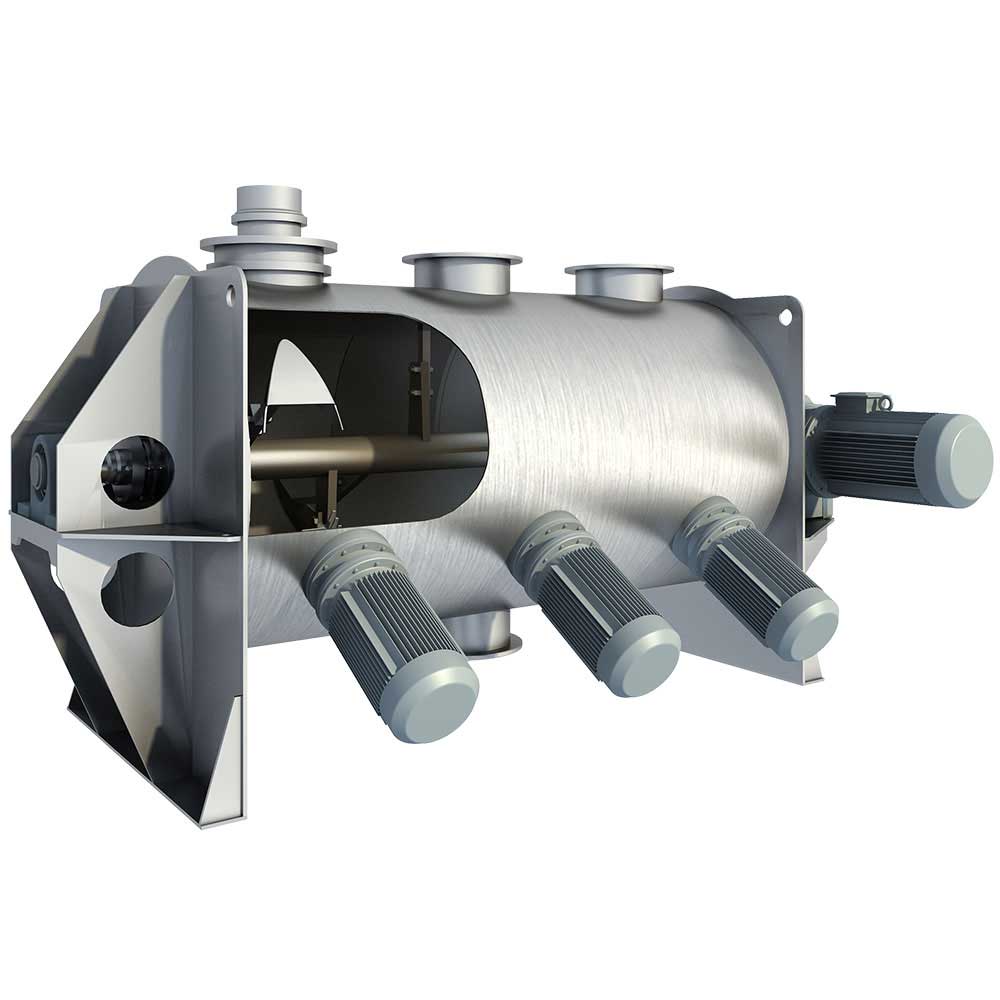
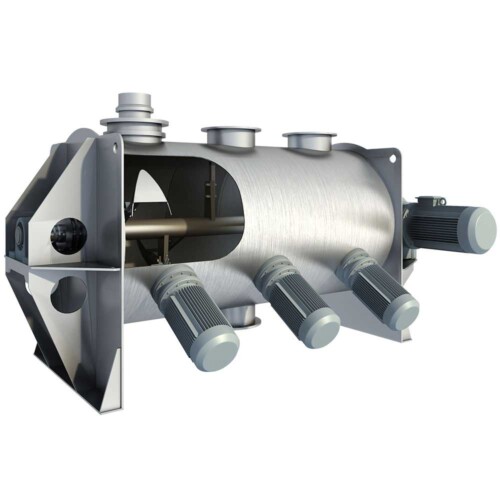
A Ploughshare Mixer is often suitable for materials that tend to agglomerate.
Its plough-shaped mixing tools generate intensive circulation of the material, while optional high-speed choppers can break up lumps and agglomerates during mixing.
The final selection should be based on the material characteristics and process requirements.
Vortex mixers are designed for a wide variety of powders, granules, and powder-liquid mixtures.
Typical applications include chemical powders, food ingredients, pharmaceutical powders, animal feed, dry mortar, ceramics, battery materials, fertilizers, pesticides, minerals, refractory materials, and other bulk solids. The actual mixer configuration should be selected according to the physical and chemical properties of the material.
Vortex manufacture a wide range of industrial powder and bulk solids mixing equipment, including:
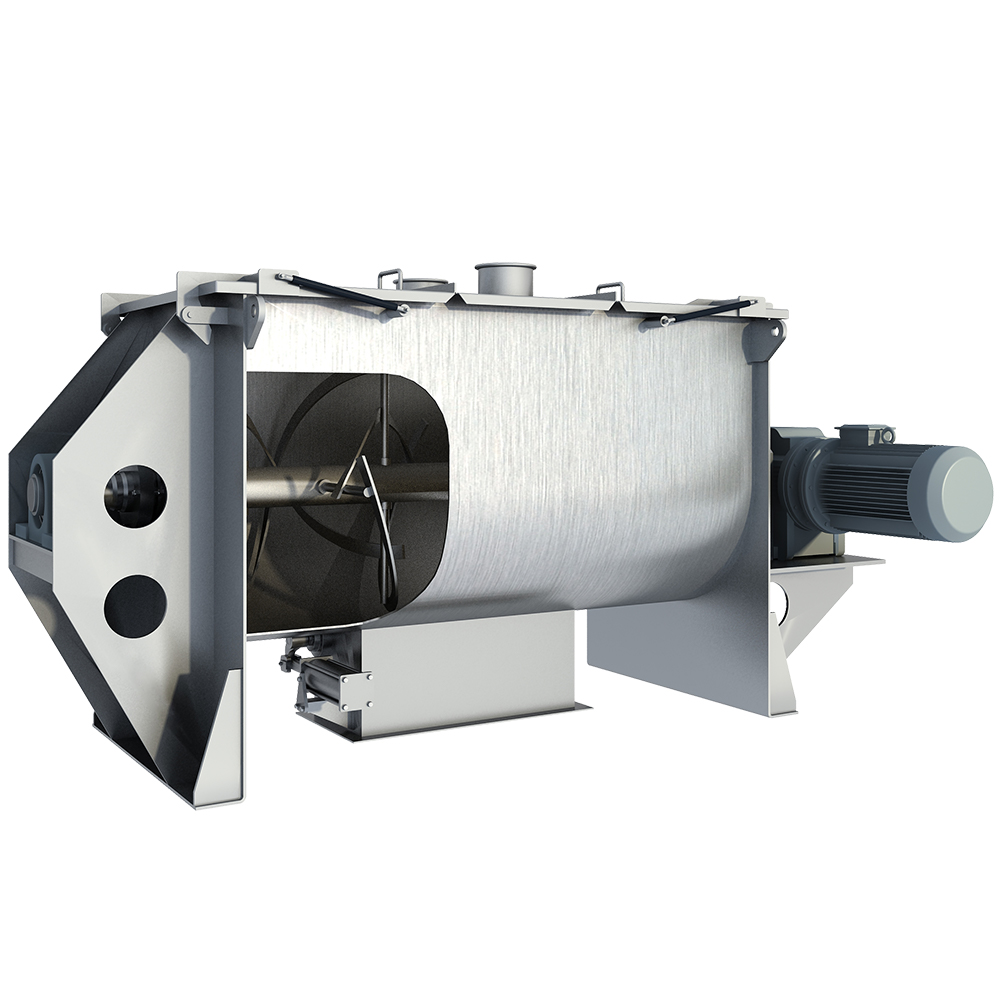
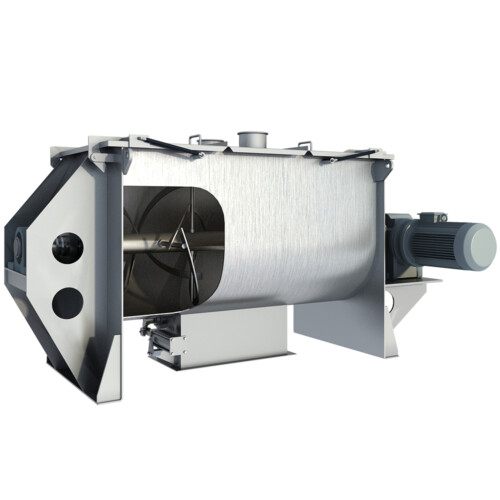
- Horizontal Ribbon Mixers
- Ploughshare Mixers
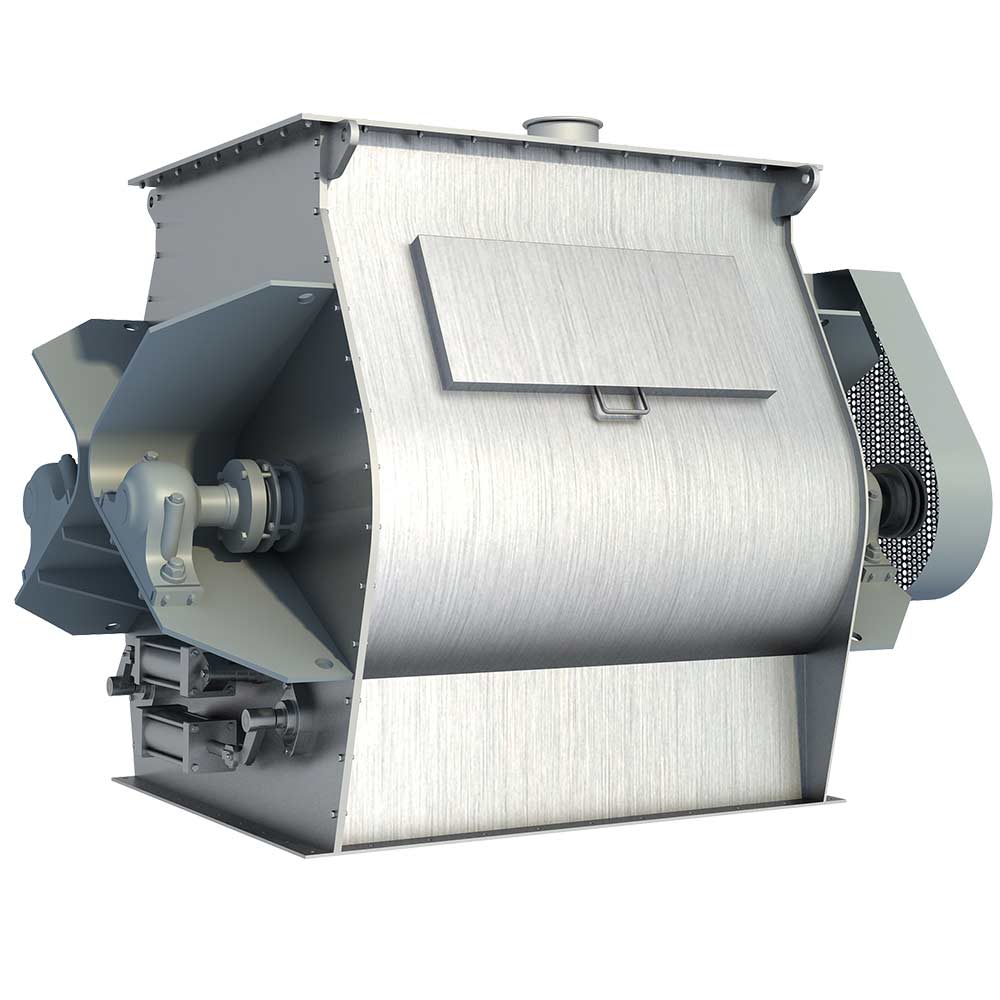
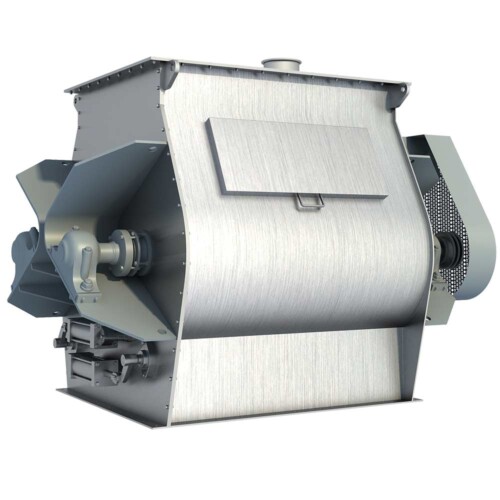
- Double Shaft Paddle Mixers (Paddle Mixers / “No-Gravity” Mixers)
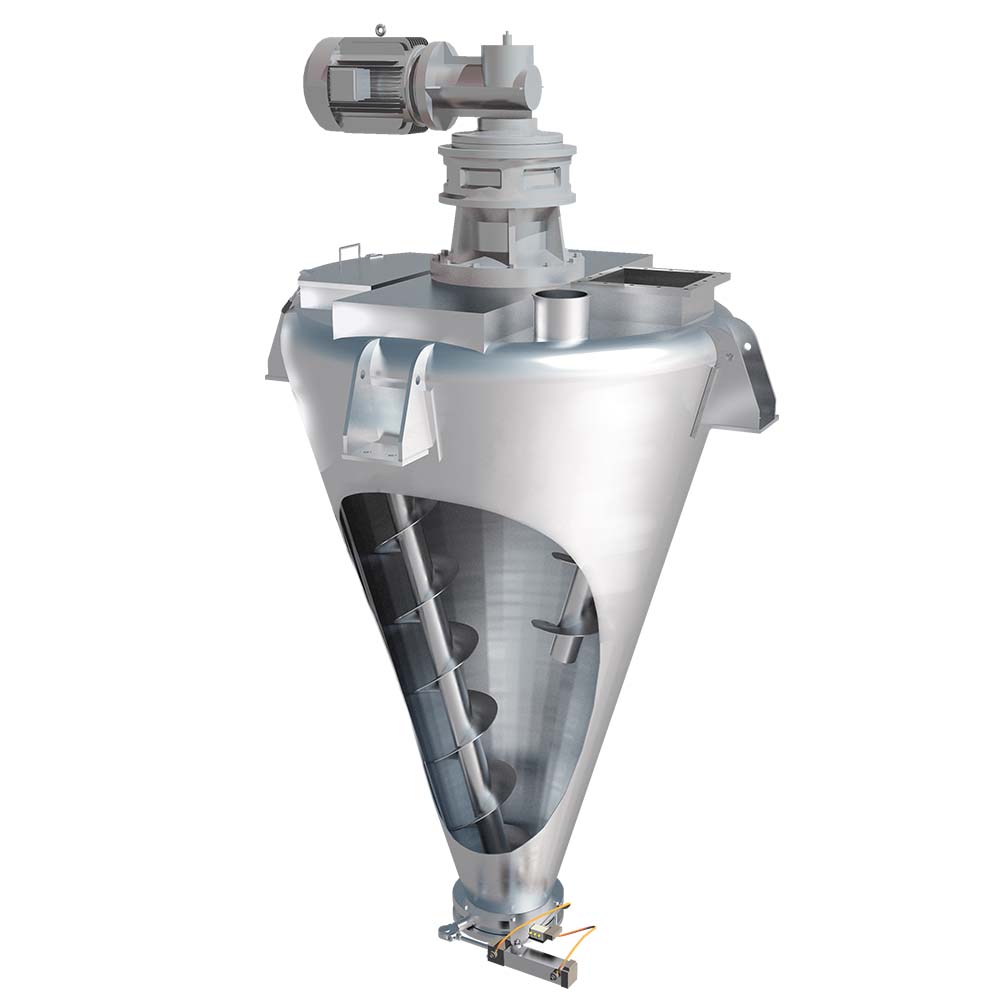
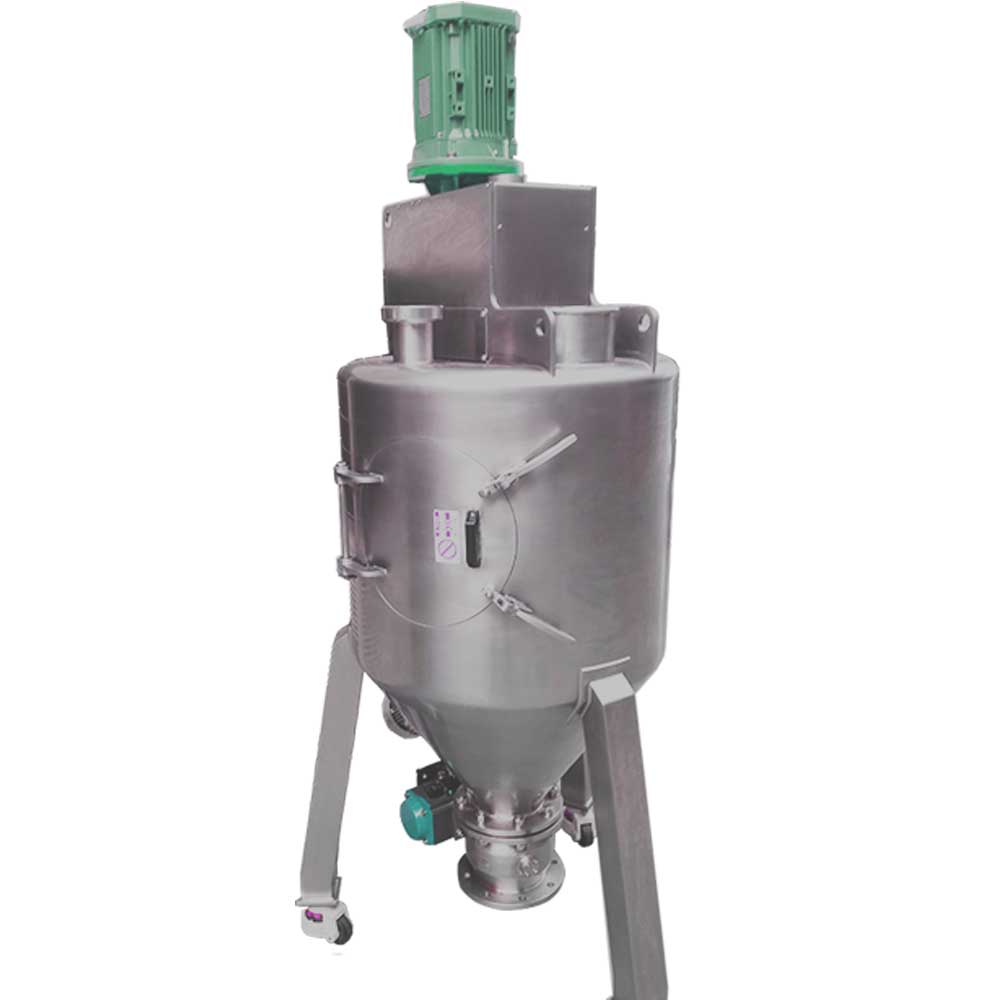
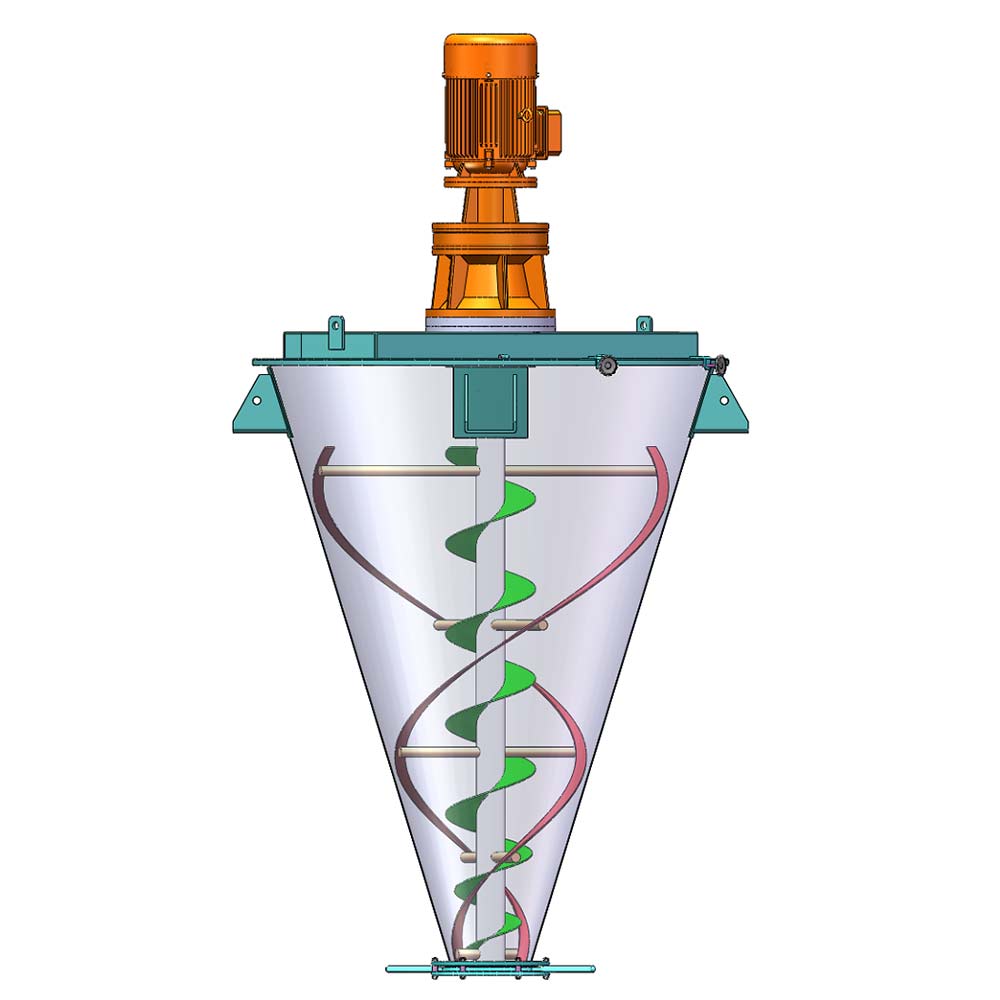
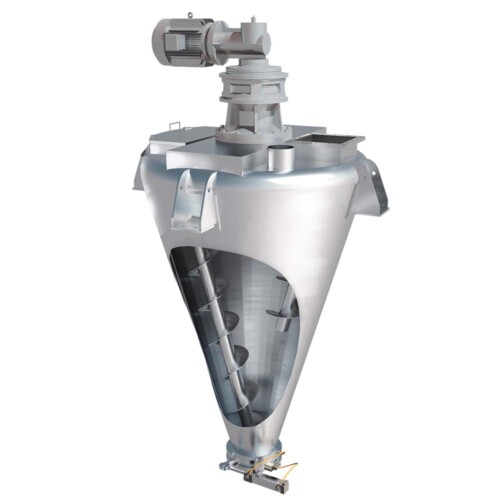
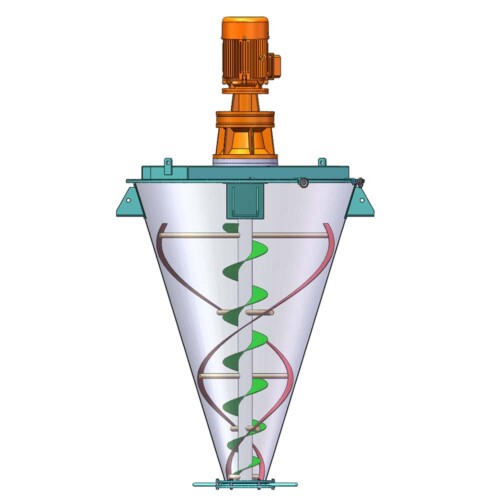
- Conical Twin-Screw Mixers
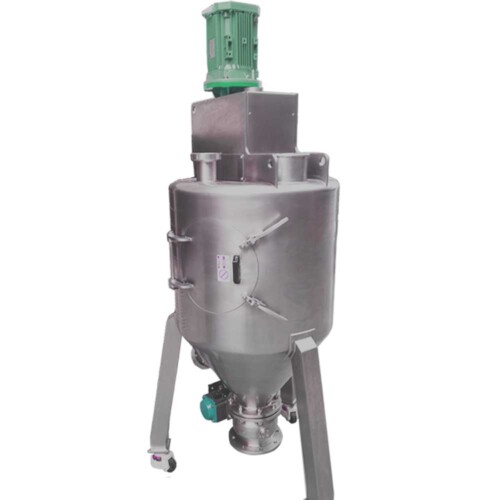
- Vertical Screw Ribbon Mixers
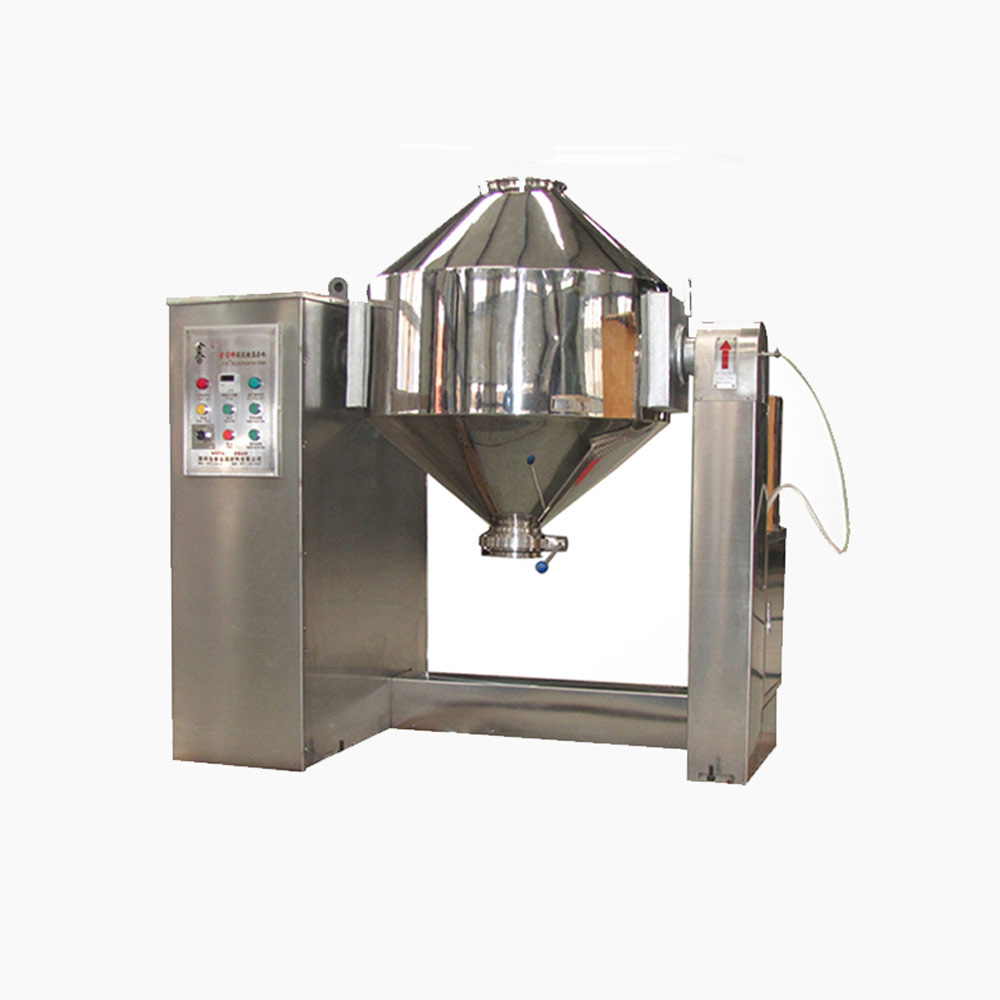
- Double Cone Mixers
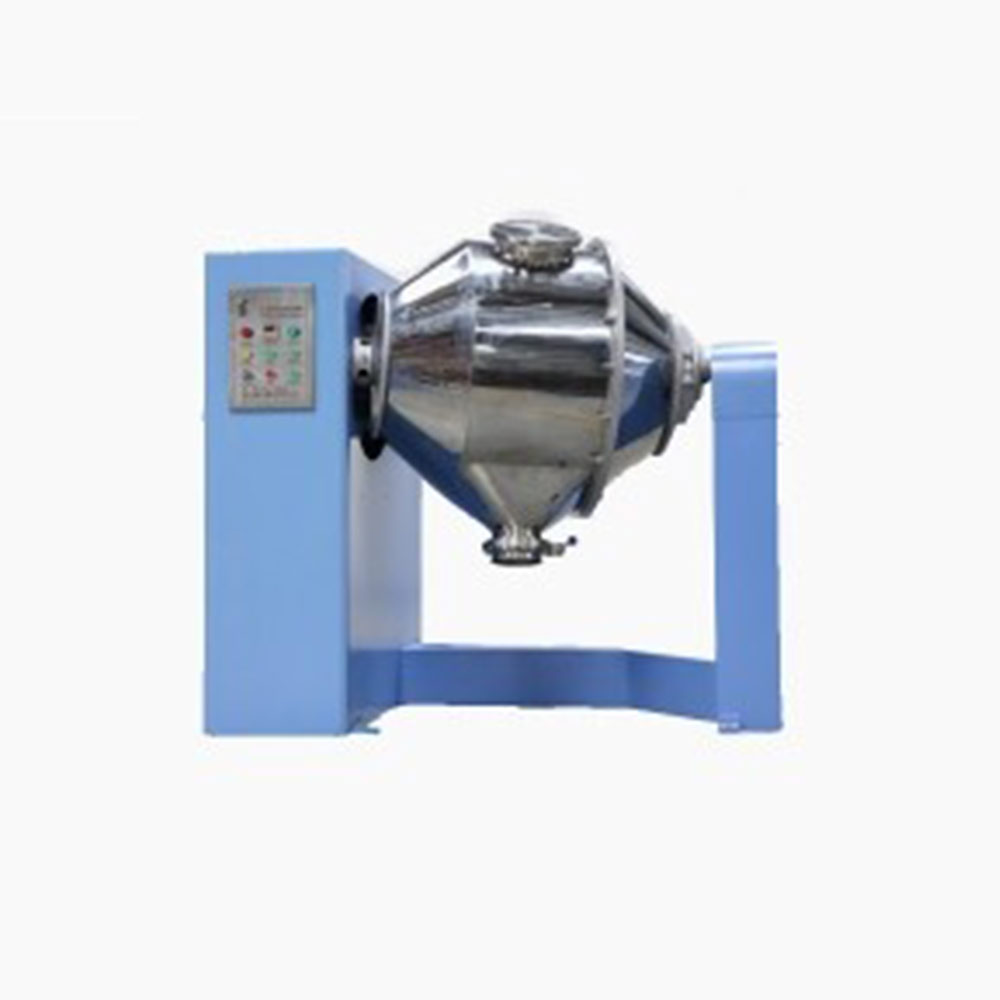
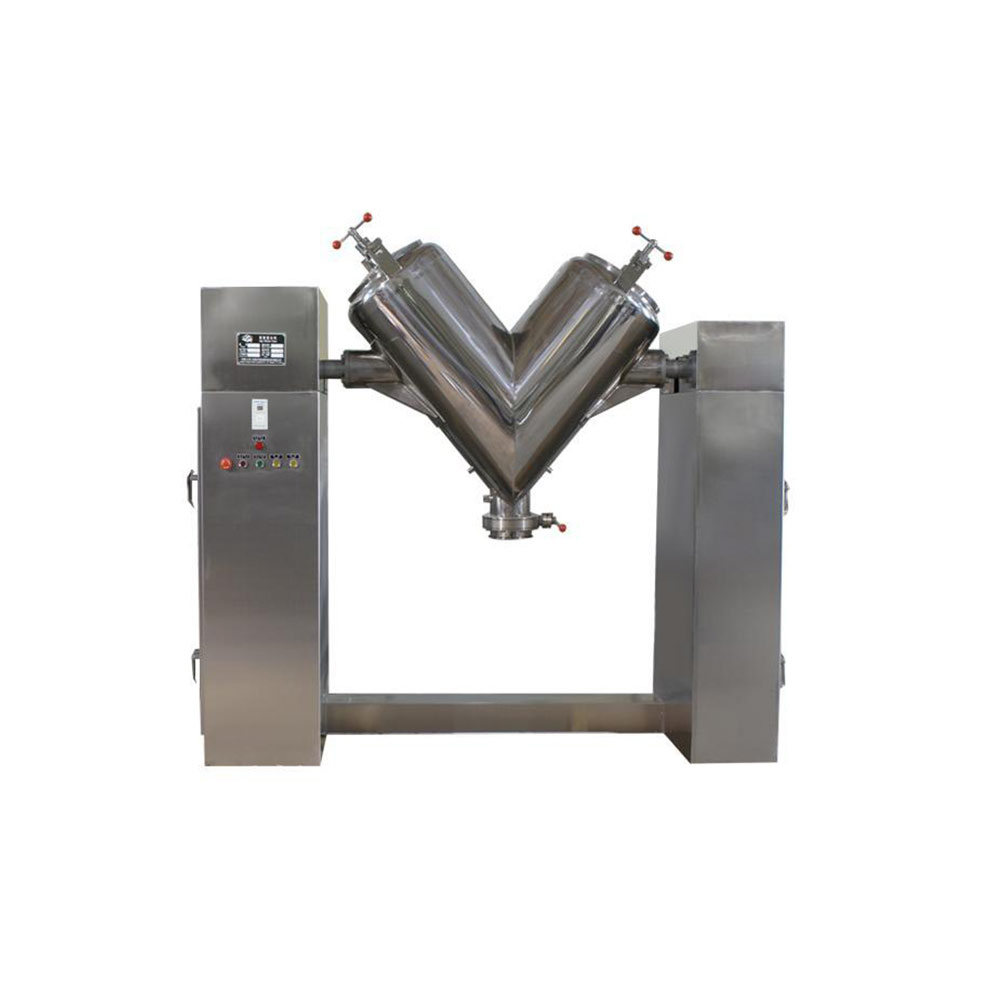
- V-Type Mixers
- 3D Motion Mixers
- Customized mixing systems and complete mixing lines
The most suitable mixer depends on your materials, production capacity, mixing ratio, required mixing time, and process conditions.
Mixer capacity should be evaluated using both the total vessel volume and the effective working volume. The required volume depends on material bulk density, batch weight, filling ratio and the mixing principle of the selected machine. A mixer should not normally be filled to its total geometric volume because sufficient space is required for material movement and effective mixing. For this reason, selecting a mixer based only on vessel volume can result in an unsuitable configuration.
The appropriate industrial powder mixer depends on several factors, including:
- Material characteristics
- Bulk density
- Particle size
- Required mixing uniformity
- Batch size or production capacity
- Moisture content
- Whether heating or drying is required
- Whether liquid addition is required
- Required discharge configuration
- Production and automation requirements
Vortex provides different powder mixer designs so that equipment can be selected according to the specific process requirements.
Vortex powder mixer selection depends on several factors, including:
- Material type and characteristics
- Bulk density and particle size
- Material flowability
- Moisture content
- Viscosity
- Mixing ratio
- Batch size or required production capacity
- Whether liquid addition is required
- Required mixing uniformity
- Temperature, pressure, vacuum, or other process requirements
Vortex engineers can recommend a suitable powder mixer based on your material and process requirements.
Yes, We can supply simple stand alone panels or automated PLC controlled systems. We normally install and test all controls on our mixers before they are shipped.
Yes, we normally test the mixers before they are shipped and mark out the wire need to connect on the control box.
We manufacture specialty mixing equipment for powder & bulk materials. Included are ribbon blender, plough mixer, conical screw mixer, twin shaft paddle mixer, V blender, double cone blender and other auxiliary equipment such as screw conveyor, quantitive auger filler.
We sell across the world, our cusotmers distribute 5 continents.
Share Us With Your Network
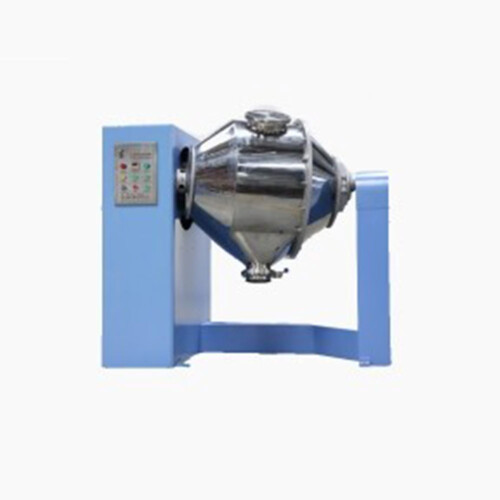
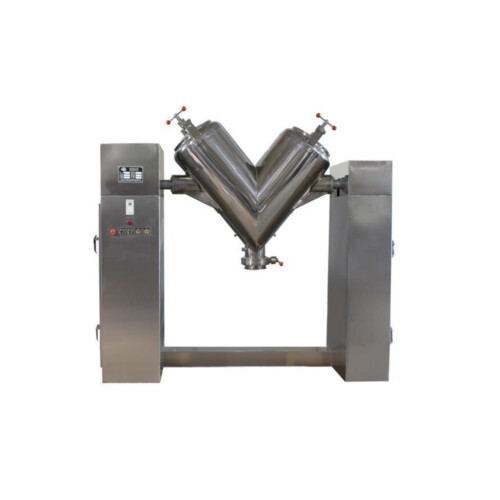
Comparing Double Cone Blender and V-Type Blender – A Guide for Industrial Mixing

Mixing of dry plants and granules in industry is an important sequence in manufacturing of pharmaceuticals, food, chemicals and a lot of other substances. The most common two blenders in use in this capacity are the Double Cone Blender and the V-Type Blender. Both, are mild tumbling mixers, which are known to maintain particle structure and bring about uniform blends with no generation of high heat or shear. They may, however, vary in design, functionality, and performance making one superior over the other relative to your particular application.
The blender at INCMachine, both of the double cone and V-type blenders, have been designed using high-grade materials and are also manufactured precisely, which offers a high-end performance in the widest variety of industries. The article has made a direct comparison to enable you make a decision on the right type of blender to use that meets your operational needs.
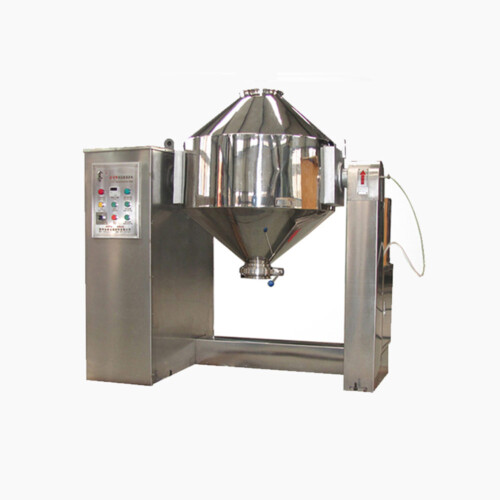
What is a Blender of Double Cone?
A Double Cone Blender is a blender, which uses a relatively symmetrical, shaped vessel in the form of two cones, attached to a rotating shaft. The design facilitates a smooth tumbling action as the container spins around triggering the contents powder to fall inside the tumbler before mixing. The cone has a shape that aids the uniformity distribution of the particles so that even at low RPMs, the mixing could be carried out successfully.
The blender is particularly good with powdered materials that are free flowing, or delicate and require a touch of homogeneous blending but no particle sizing.
Important characteristic of Double cone blender
- Symmetrical double cone construction provides a uniform movement of materials
- Soft tumbling motion that could use temperature sensitive and delicate products
- Can be provided at all sizes including laboratory scale to industrial scale
- There are conical ends that are easy to load and completely discharged
- Optional spray nozzles, vacuum loading systems and control systems
Common Applications
- Powder drugs
- Nutrition supplements
- Ingredients of dry foods
- Chemical granules
- Make up powders
What is V-Type Blender?
A V-Type Blender, also known as a V-shell blender or V-cone blender, consists of two cylindrical arms connected in a V shape. As the arms turn, the powder is pushed across the middle of the V to the other side and the repeated act of splitting and recombining powder allows the powder to mix well. It is a low-shear mixer too, which is suitable when the mixture to be mixed up is fragile and homogenous.
V-type blender is characterized by short mixing time and is capable of attaining homogeneity particularly when the particle size and density in the materials involved are relatively similar.
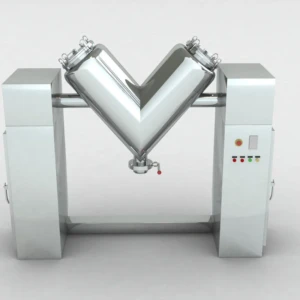
Important Specification of V-Type Blender
V-shaped shell with two cylinders to split up and mix powders
- A short cycle of blending because of the angular flow paths
- Applicable on dry materials that are free flowing
- Optional stirring bar to mix more quickly or more thoroughly
- Low maintenance and retention of products
Common Applications
- Pharmaceutical mixing API
- blending of food and spice
- Powdered detergents
- Mineral additions –
- The coloring and pigments
Structural Comparison
- The major contrast between the double cone blenders and V-type blender is the geometry and the movement of materials in the vessel.
- The end of a Double Cone Blender is smooth and in shape of a cone that causes the natural rolling and gravitational flow
- V-Type Blender v-type blenders have angular split chambers that give it a more aggressive splitting effect and recombination effect
- Generally, the V-type blender has marginally more rapid blend times, on account of the greater sharp angle made internal surfaces as well as more dynamic routes of materials. The double cone type of blender also gives a more consistent gravitational flow that could be advantageous in very delicate materials.
Performance Comparison
Mixing Efficiency
Both the machines are capable of homogenous mixing but depend on the nature of the material:
The Double Cone Blender is superior when going on fragile materials and powdered materials likely to become segregated: a more gentle blending action is provided.
The V-Type Blender has quicker time of blending, and it performs well using uniform-sized free-flowing powders.
Washing and Drying
Its discharge is improved, as Double Cone Blender has symmetrical tapered ends. The amount of material that is retained is minimal, thus it is a good choice where one wants to avoid cross-contamination.
The quick cleaning design of V-Type Blender allows it to hold store some of the product in the corners of the V arms of it is not cleaned correctly, though its smaller size facilitates the ability to manually clean the product.

Material Compatibility
Decision on selection of V-type or DOUBLE cone blender follows the decision on the physical and flow properties of the material.
| Type of Material | Suggested Blender |
| Heat Resistant | Double Cone Blender |
| Delicate particles | Dual cone blender |
| Free-flowing powders | V-Type Blender |
| Similarly dense materials | V-Type Blender |
| Thick or viscous powders | Agitated Double Cone |
Which Blender to Pick
To use a Double Cone Blender, make your choice when:
- You will require delicate low-shear combinations over delicate powders
- The complete product discharge is necessary
- You are combining sensitive or separating materials
- The size of batches is large and optimization is to be achieved through vacuum or heating integration
Select V-Type Blender in case:
- You desire quicker homogenization of homogeneous dry powders
- Space and cost efficiency come first
- You do not need discharge systems that will be highly specialized
- You would rather have a simpler design when doing small and middle-sized batch production
Conclusion
The V-Type Blender as well as the Double Cone Blender are solid, effective, and multi-purpose blenders in industrial use regarding dry powder mixing. Although their operations are the same, they have a different structure and mixing dynamics that make each one more applicable to certain materials and operational requirements.
The Double Cone Blender is well suited to sensitive or separating powders that need low shear, high-quality thorough mixing and good discharge. The V-Type Blender is more compact and does better mixing of the same content in quick cycles.
INCMachine sells customizable blending solutions in all common sizes and configurations and constructed out of high-quality materials that are supported by highly qualified technical assistance. Go to the product pages or speak to our team to discover which the right blender to support your operation is.
Ask An Expert