Ask An Expert
Frequently Asked Questions
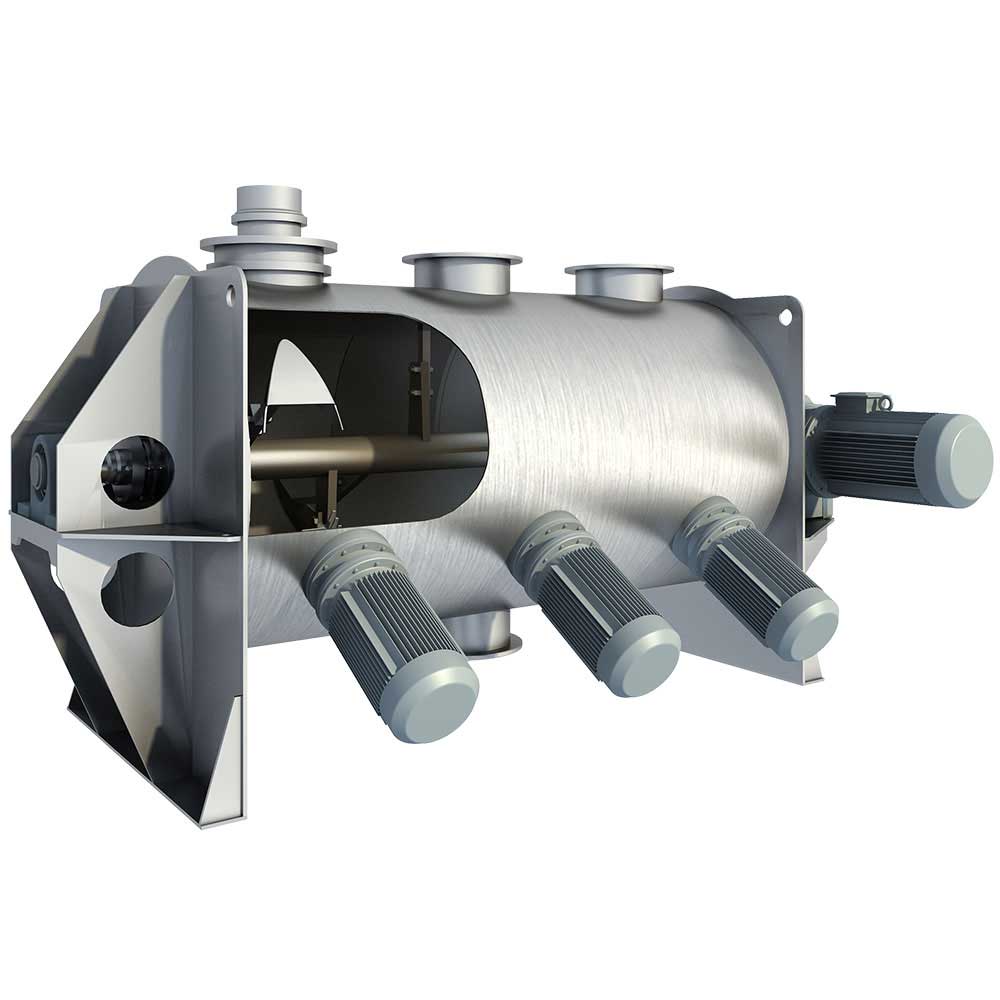
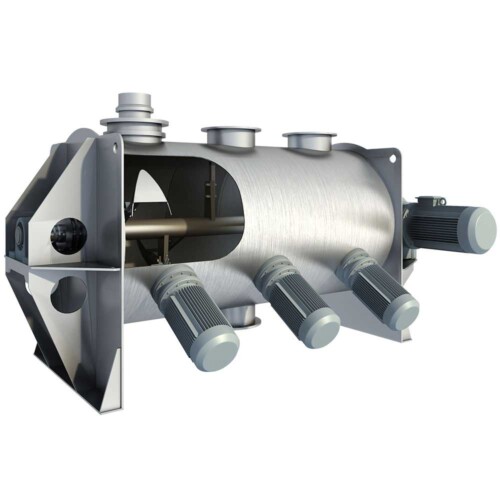
A Ploughshare Mixer is often suitable for materials that tend to agglomerate.
Its plough-shaped mixing tools generate intensive circulation of the material, while optional high-speed choppers can break up lumps and agglomerates during mixing.
The final selection should be based on the material characteristics and process requirements.
Vortex mixers are designed for a wide variety of powders, granules, and powder-liquid mixtures.
Typical applications include chemical powders, food ingredients, pharmaceutical powders, animal feed, dry mortar, ceramics, battery materials, fertilizers, pesticides, minerals, refractory materials, and other bulk solids. The actual mixer configuration should be selected according to the physical and chemical properties of the material.
Vortex manufacture a wide range of industrial powder and bulk solids mixing equipment, including:
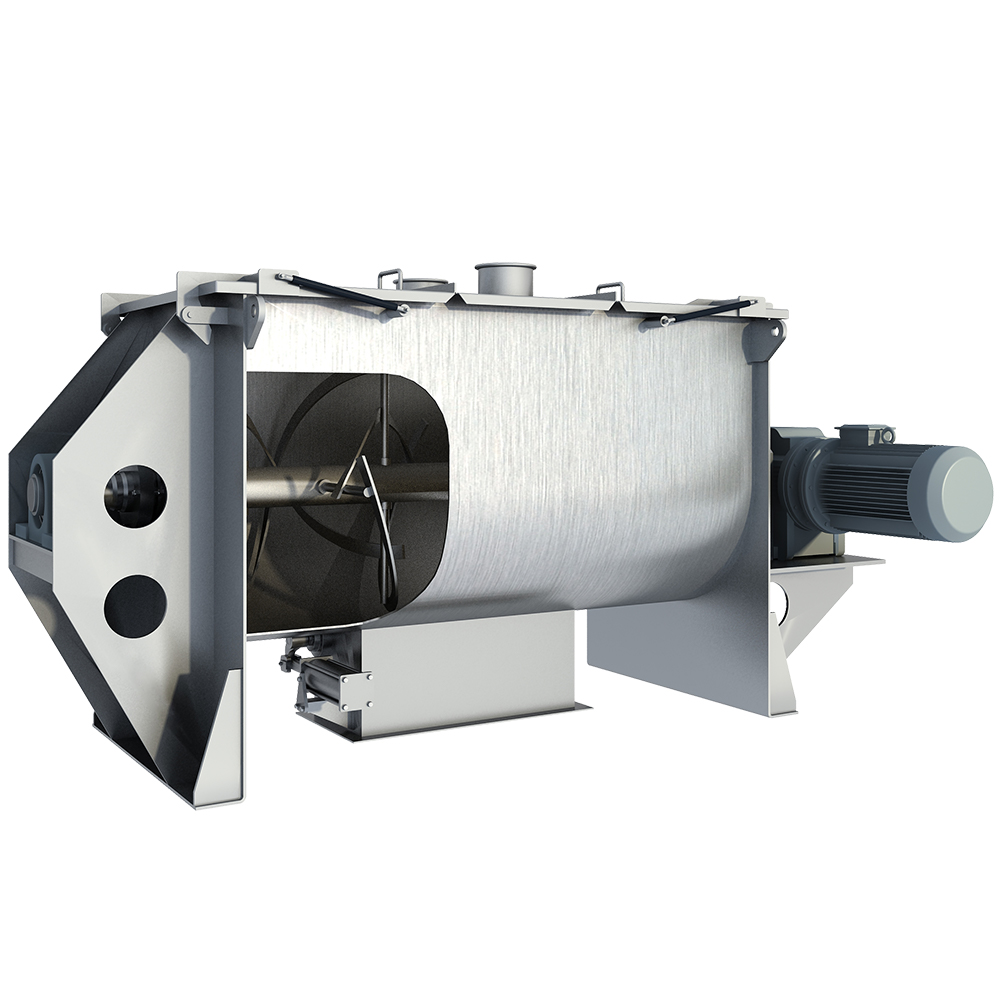
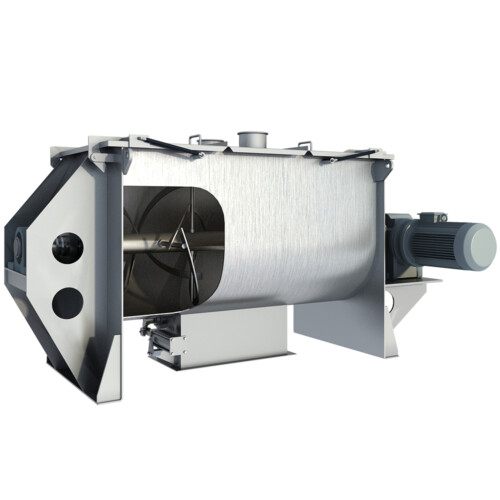
- Horizontal Ribbon Mixers
- Ploughshare Mixers
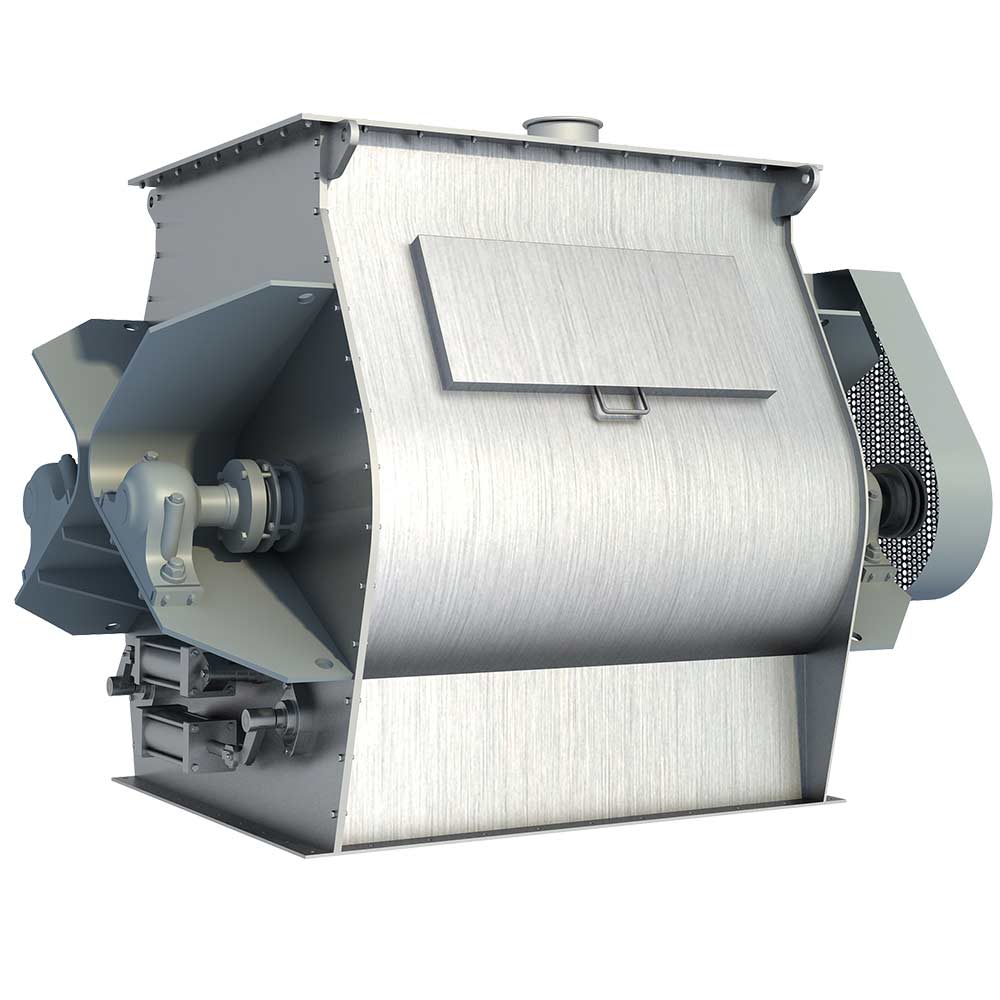
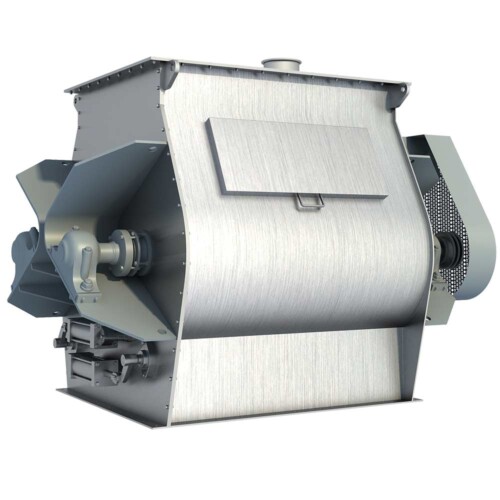
- Double Shaft Paddle Mixers (Paddle Mixers / “No-Gravity” Mixers)
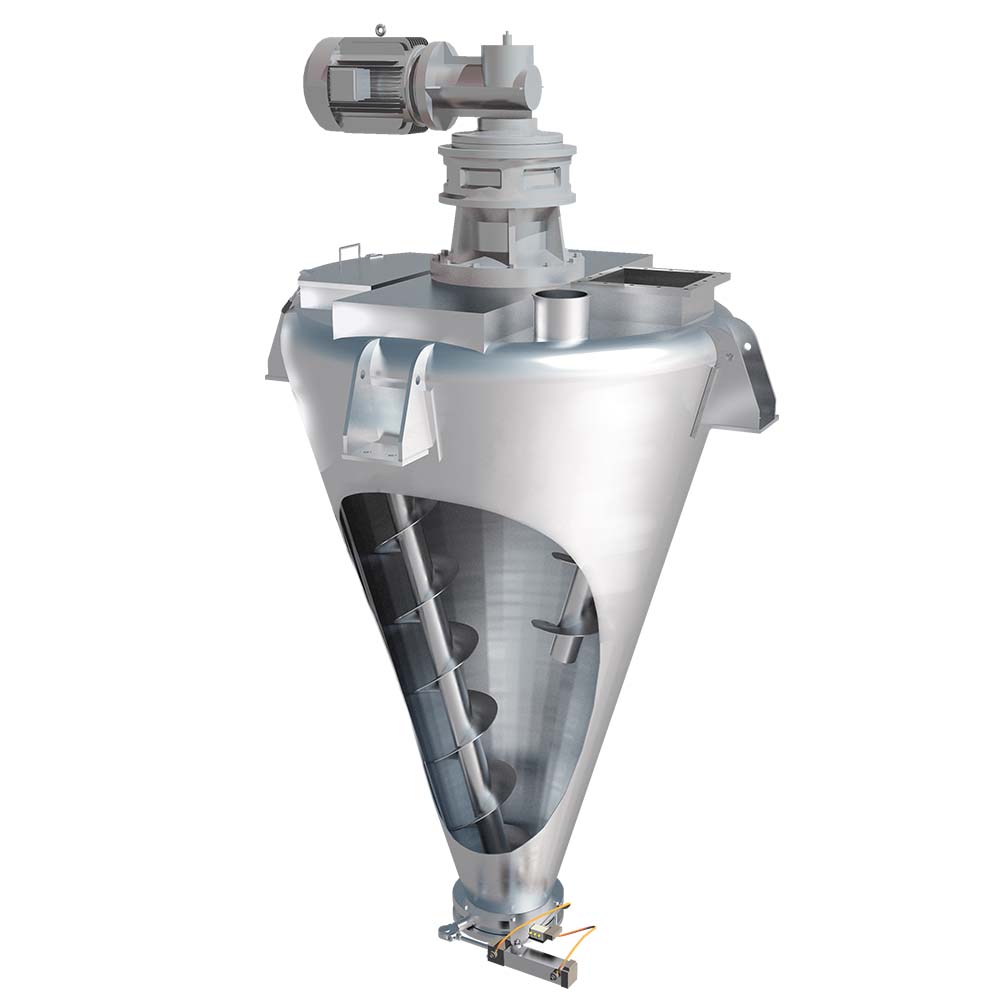
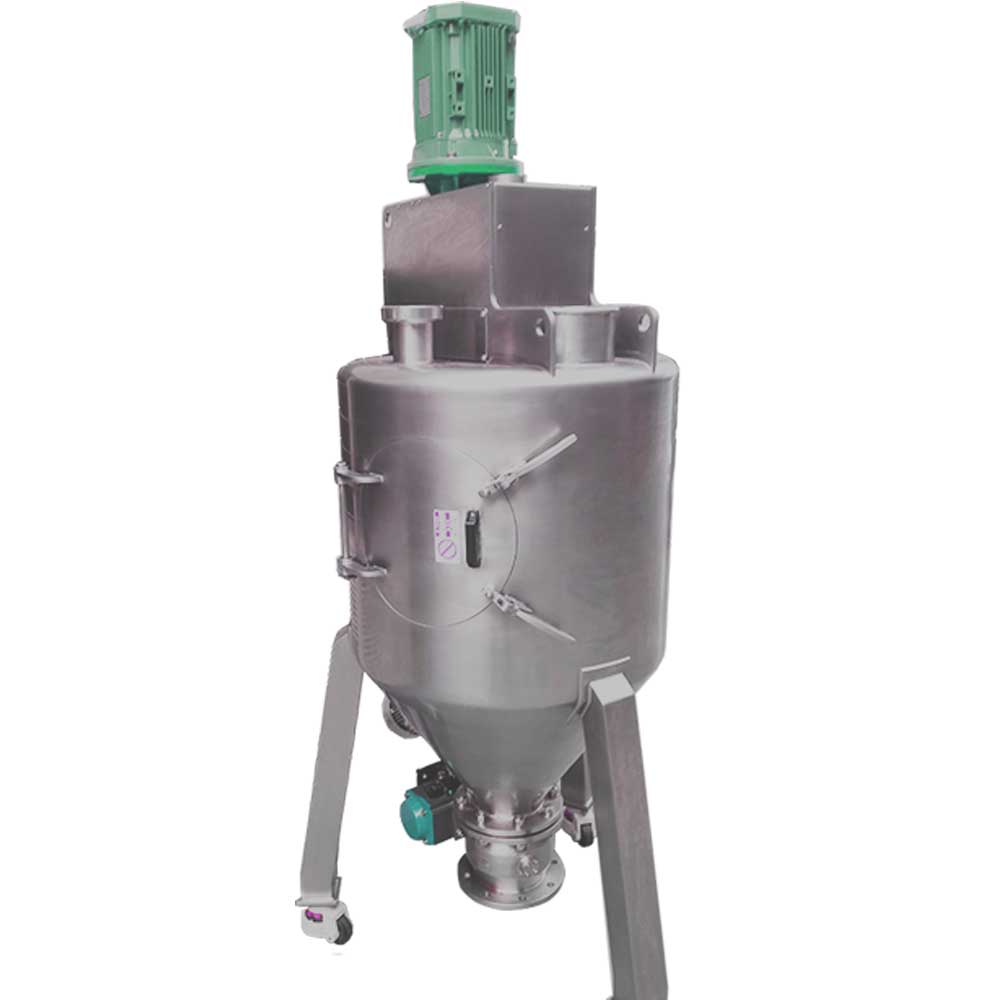
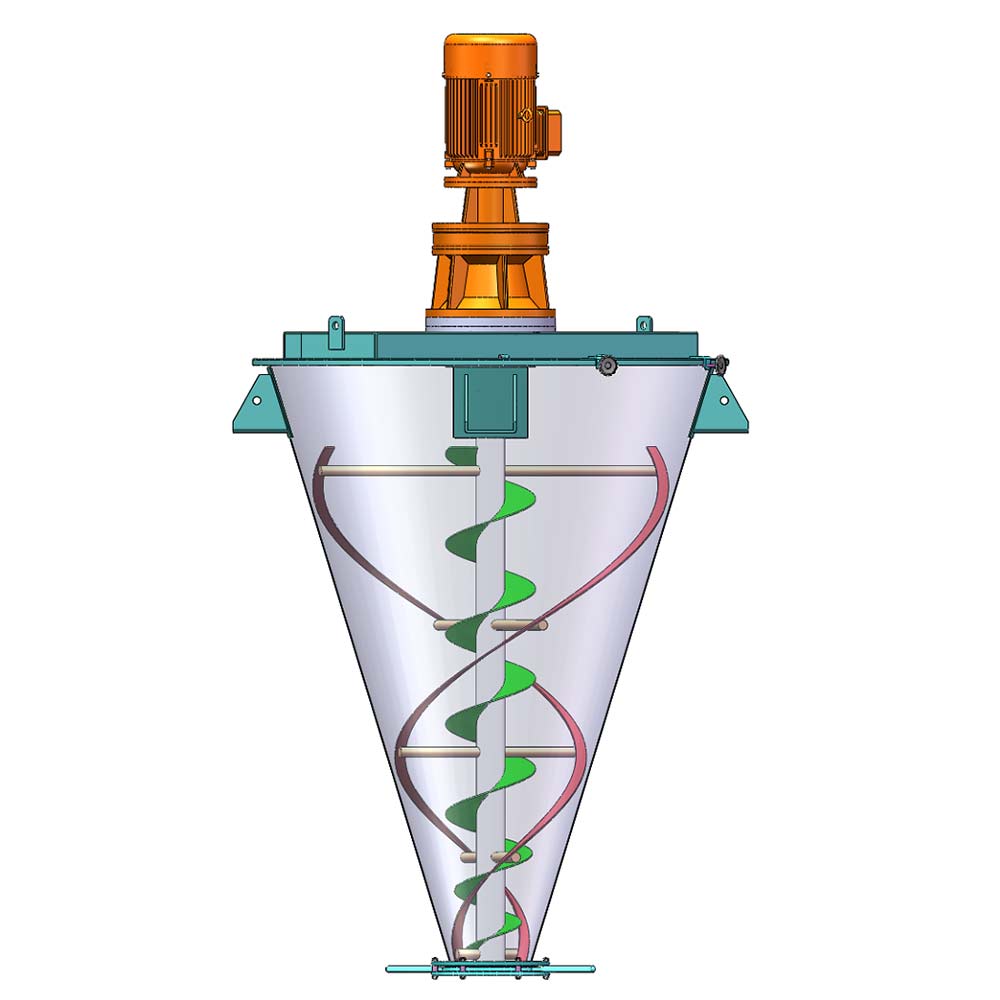
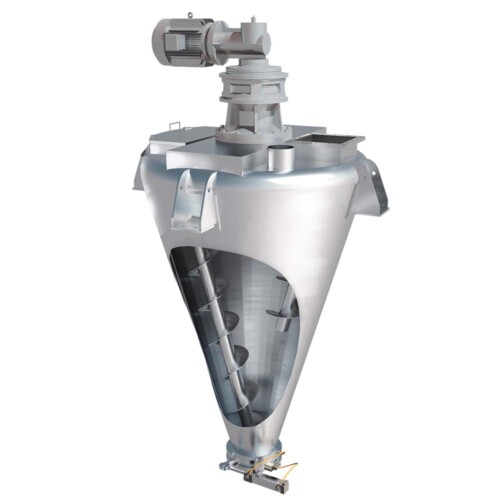
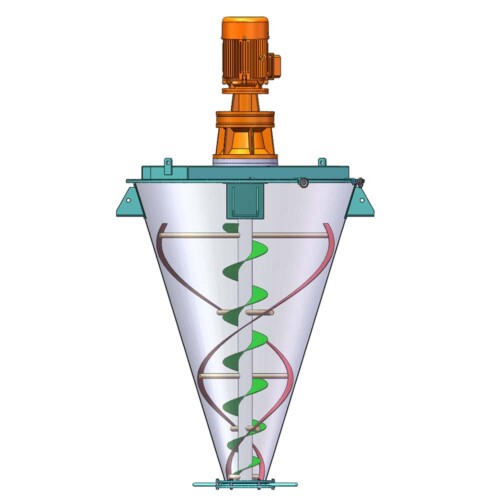
- Conical Twin-Screw Mixers
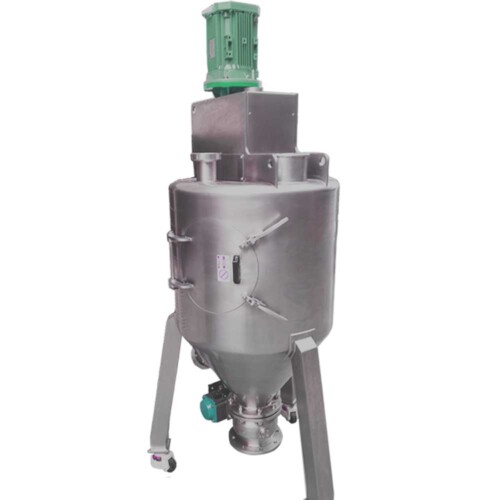
- Vertical Screw Ribbon Mixers
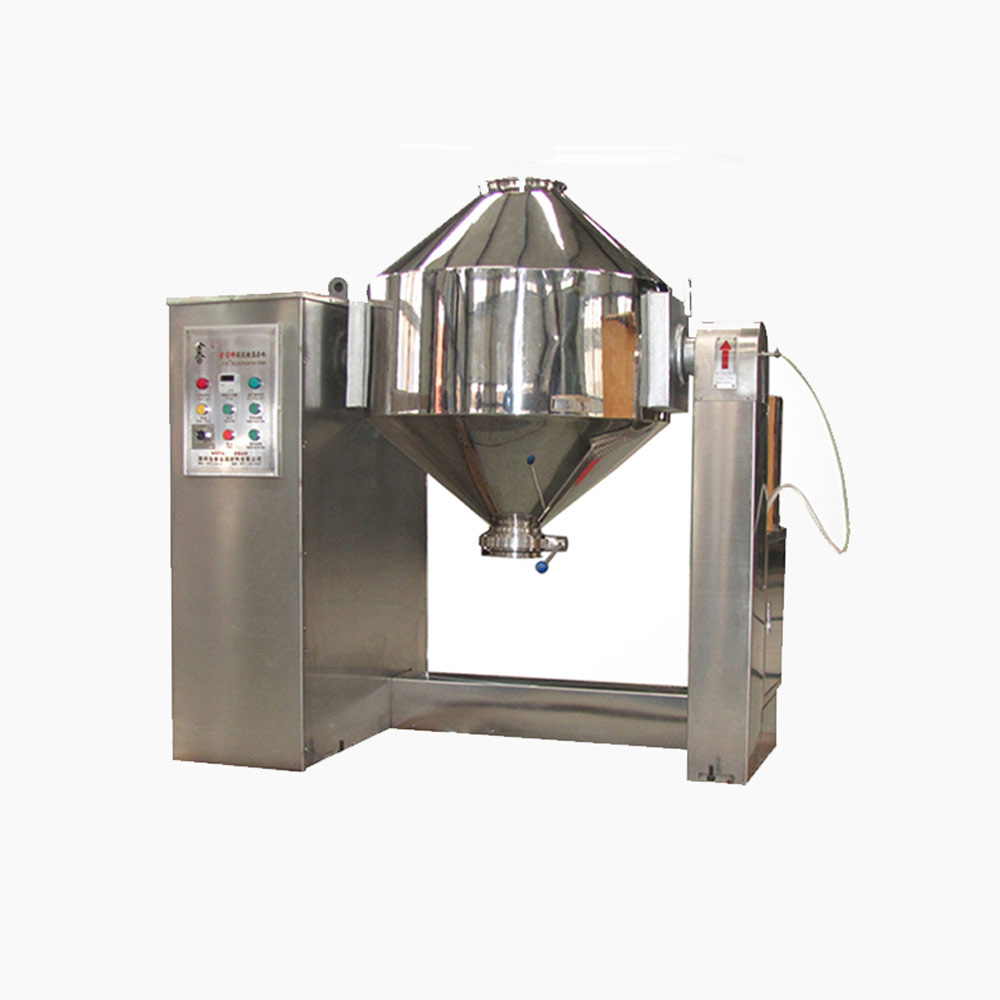
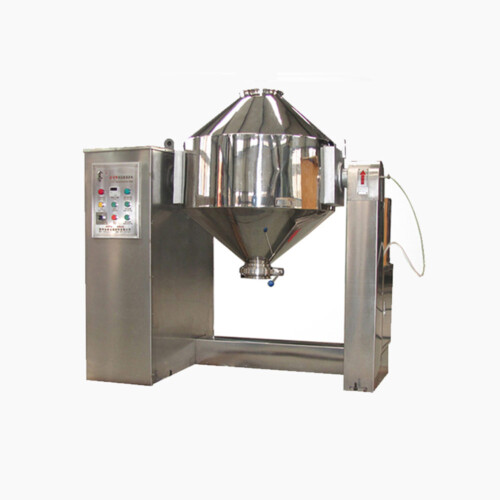
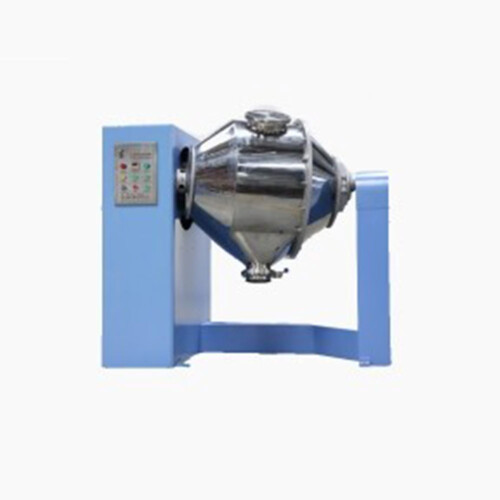
- Double Cone Mixers
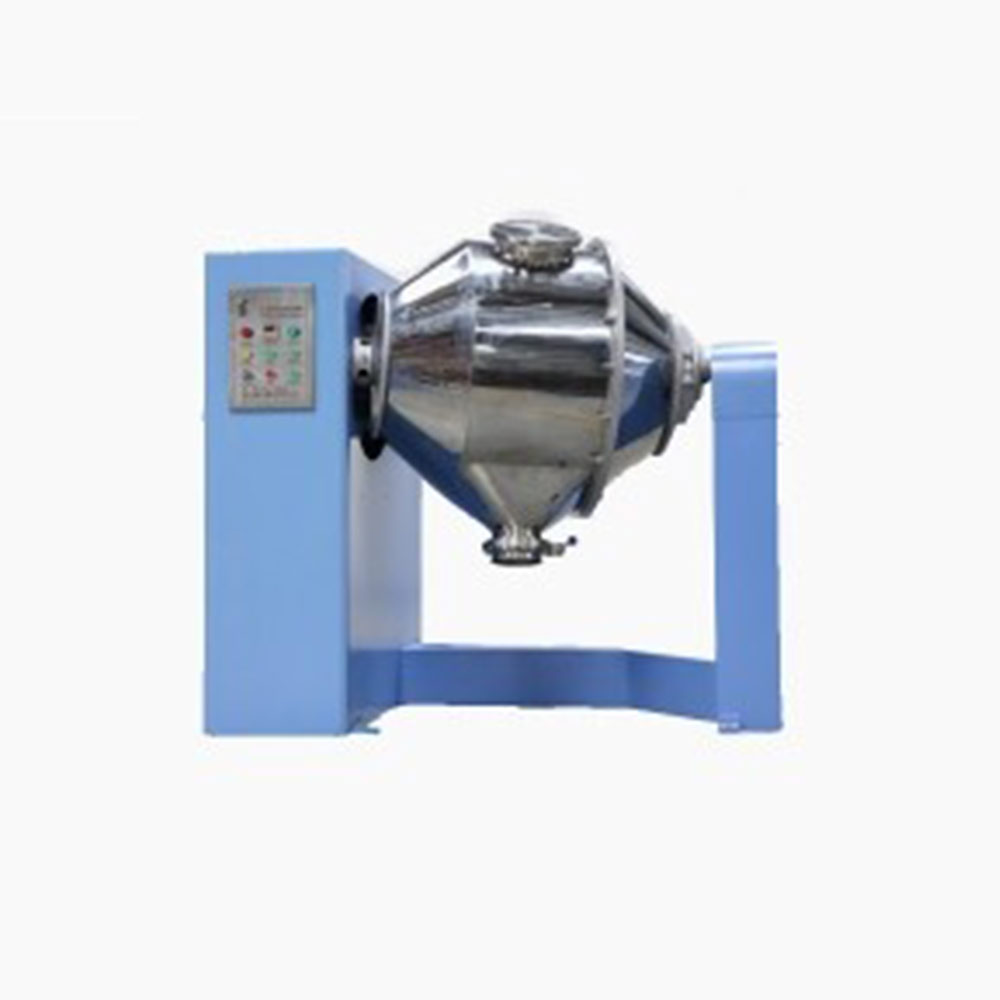
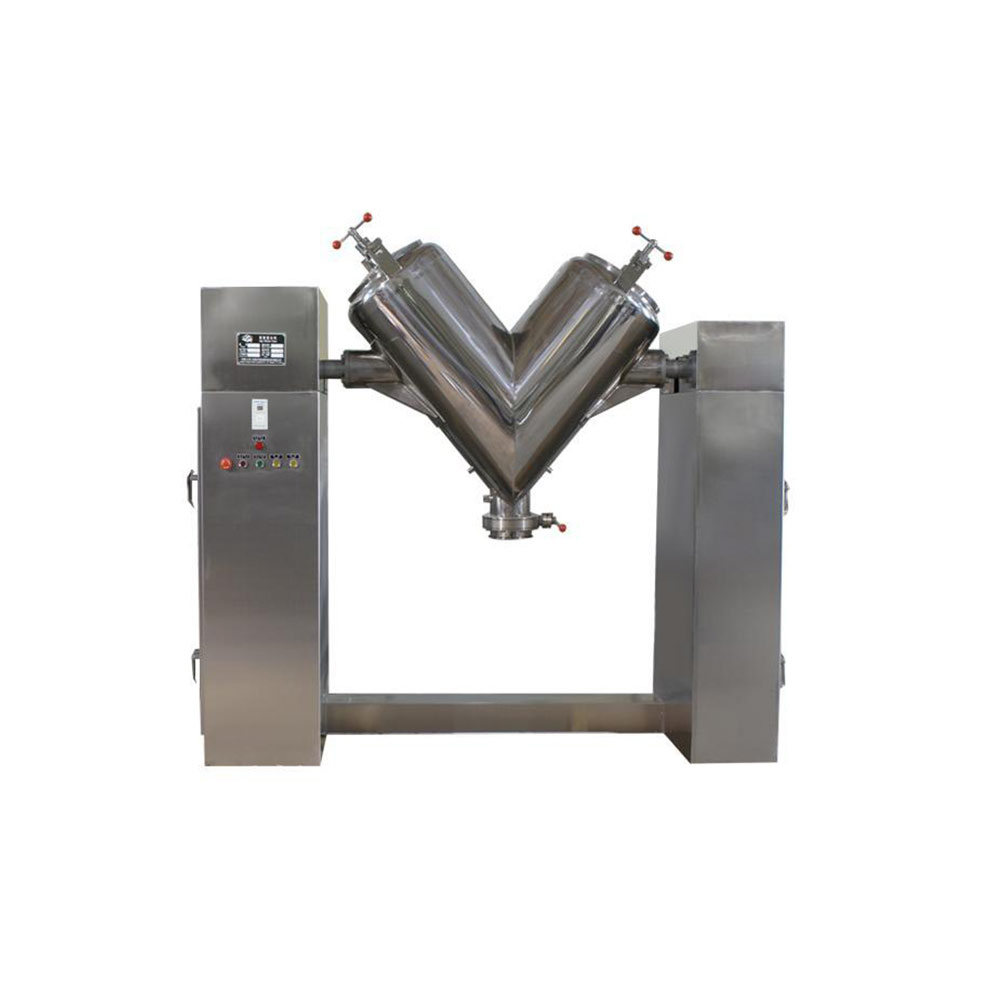
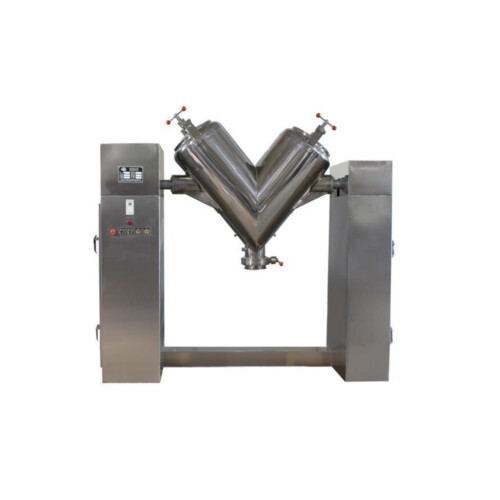
- V-Type Mixers
- 3D Motion Mixers
- Customized mixing systems and complete mixing lines
The most suitable mixer depends on your materials, production capacity, mixing ratio, required mixing time, and process conditions.
Mixer capacity should be evaluated using both the total vessel volume and the effective working volume. The required volume depends on material bulk density, batch weight, filling ratio and the mixing principle of the selected machine. A mixer should not normally be filled to its total geometric volume because sufficient space is required for material movement and effective mixing. For this reason, selecting a mixer based only on vessel volume can result in an unsuitable configuration.
The appropriate industrial powder mixer depends on several factors, including:
- Material characteristics
- Bulk density
- Particle size
- Required mixing uniformity
- Batch size or production capacity
- Moisture content
- Whether heating or drying is required
- Whether liquid addition is required
- Required discharge configuration
- Production and automation requirements
Vortex provides different powder mixer designs so that equipment can be selected according to the specific process requirements.
Vortex powder mixer selection depends on several factors, including:
- Material type and characteristics
- Bulk density and particle size
- Material flowability
- Moisture content
- Viscosity
- Mixing ratio
- Batch size or required production capacity
- Whether liquid addition is required
- Required mixing uniformity
- Temperature, pressure, vacuum, or other process requirements
Vortex engineers can recommend a suitable powder mixer based on your material and process requirements.
Yes, We can supply simple stand alone panels or automated PLC controlled systems. We normally install and test all controls on our mixers before they are shipped.
Yes, we normally test the mixers before they are shipped and mark out the wire need to connect on the control box.
We manufacture specialty mixing equipment for powder & bulk materials. Included are ribbon blender, plough mixer, conical screw mixer, twin shaft paddle mixer, V blender, double cone blender and other auxiliary equipment such as screw conveyor, quantitive auger filler.
We sell across the world, our cusotmers distribute 5 continents.
Share Us With Your Network
Top 5 Applications for Two Shaft Paddle Mixer in Industrial Manufacturing
In production efficient mixing will provide reliability of quality control, short production time with a best match of the ingredients. The two-shaft paddle mixer: it is a robust yet precise mixing solution that boasts of uniform blending. It has a different design and has two agitating shafts that are in opposition, which have paddles that gently fold, shear, and tumble the materials in a u-shaped trough.
This makes mixing quickly, and the process is comprehensive as the integrity of ingredients is maintained. This article examines the best five industrial applications of the mixer of this kind, detailing the reasons as to why the mixer is a favorite to the industries that require consistent and scalable blending.
5 Applications for Two‑Shaft Paddle Mixer
- Food Processing Industry
Applications
Paddle mixers, two-shaft type, are popular to mix food dry blends, food slurries, pastes and semi wet mixtures. Typical blending are seasoning blends, instant dough, flavoring blends, pet food blends and snack powders.
Key Benefits
- Delicate ingredients like grain flakes, or dried fruit, will be safeguarded during gentle mixing.
- Paddles provide uniform proportion of spices, colorings and seasonings.
- The homogenous hydration and flavor infusion is possible with liquid spray systems integration.
- Food safety standards are achieved by hygienic design, polished materials and faced with easy to clean surfaces.
- The paddle mixer is quite suitable in large scale food production because manufacturers enjoy shorter batch times, easy flow and consistent blend capability.
- Nutraceutical and Pharmaceutical Industry
Applications
This mixer has extremely important functions in the homogenization of sensitive pharmaceutical powders, granules, dietary supplements, vitamin compounds and seed-coated agents.
Key Benefits
- Comprehensive drying of active ingredients without the overheating.
- Modular paddle design it provides laminar flow and interactions with each other due to uniform blending.
- There are optional sampling ports where one can do in-process quality checks.
- GMP compliant and washable sanitary stainless steel construction.
- In ensuring product integrity and potency during the production of pharmaceutical products, two-shaft paddle mixers achieve this by providing low shear mixing with accuracy.
- Chemical Industry
Applications
These mixers are applied to the chemical manufacturing, such as the production of detergents, pigments, fertilizers, resins and catalyst blends.
Key Benefits
- Capability to mix powders with liquids in form of detergent slurries or granules.
- A sensitive compound will not get degraded under controlled mixing conditions.
- Large torque paddles are used to deal with abrasive or heavy chemicals.
- Jacketed troughs provide a possibility to control temperature with heat-sensitive reaction.
- The operators like quick blend time, low shear intensity, and flexibility with a broad spectrum of chemical products.
- Plastic and polymer Industry
Applications
The mixer would be a good choice in incorporating plasticizers, color master batches, fillers, and additives to resin or polymer powders prior to extrusion or molding.
Key Benefits
- Even pigmentation and additive increases the consistency of the end product.
- Subtle shear does not harm towards the small polymer particles.
- Plastic melt blending is facilitated with heating capabilities.
- Tough constructions allow rough filler materials.
- Paddle mixing technology always reports greater color consistency, fluid material flow, and easier downline processing.
- Building Materials Industry and Mineral
Applications
In cement and plaster, gypsum, and compound mixing, even blending into such beasts and abrasive material is identified with the two shaft paddle mixer.
Key Benefits
- The dense mixtures are prevented using high torque paddles.
- Complete mixing of cement, lime, sand and pigment to ensure similarities of the final products.
- Incredibly, the short batch times are suitable to scale-up production.
- Improved clean-out in the case of batch discharge assists in efficiency opening up products.
- This mixer has overcome bulk needs of the industry and enhanced the performance, uniformity of color as well as structural characteristics of different materials in their downstream product realization.
Unique advantages of Two Shaft Paddle Mixers
A number of principal design elements divulge this mixer to be an interesting option:
- Counter rotating shafts create even distribution without dead areas.
- Paddle pitch and angle is adjustable to specific mixing needs.
- Variable speed control varies with rate of flow and viscosity and volume of the batch.
- The liquid spray integration allows having an even moisture or coating.
- Optional jacketing keeps processing temperatures at a constant level.
- Sanitary building assists hygienic requirements of food or medicine.
The qualities enable the manufacturers to maximize on quality, swiftness, and efficiency of their operations in a variety of industrial uses.

Tips in ensuring high performance in the operations
To make full use of the ability of a paddle mixer, remember the following:
- Paddle geometry options exploration
Make paddle design adaptable to the type of materials-solid plows to heavy compounds, curled paddles finer dry materials.
- Install liquid addition devices
Spray bars should be used in mixing liquids so as to spread them evenly by use of fine nozzles in the spray bars.
- Variable speed drives should be used
Depending on the materials and the step at hand, switch between slow mixing, ferocious blending and subdued folding.
- Exploit sampling and QC
Real time checks can be done by use of sampling ports that enhance the quality control in the production.
- Easy clean design
When the type of product changes, put easy open hoppers, accessible paddles, and draining of fast product change.
Conclusion
The 2 shaft paddle mixer is an engineer wonder as it enhances productive business in various fields; including food, pharmaceutical, petroleum, chemicals, polymers, and minerals. Its architecture has particularly excellent blending consistency at a low shear but thorough level of mixing, brief cycle times, and flexible capacity.
Footing knowledge of the top five applications and realizing the different benefits of the mixer, in addition to the key distinction in their advantages, manufacturers can implement effective changes in terms of product quality, efficacy of the processes, and flexibility in operating it.
Ask An Expert