Ask An Expert
Frequently Asked Questions
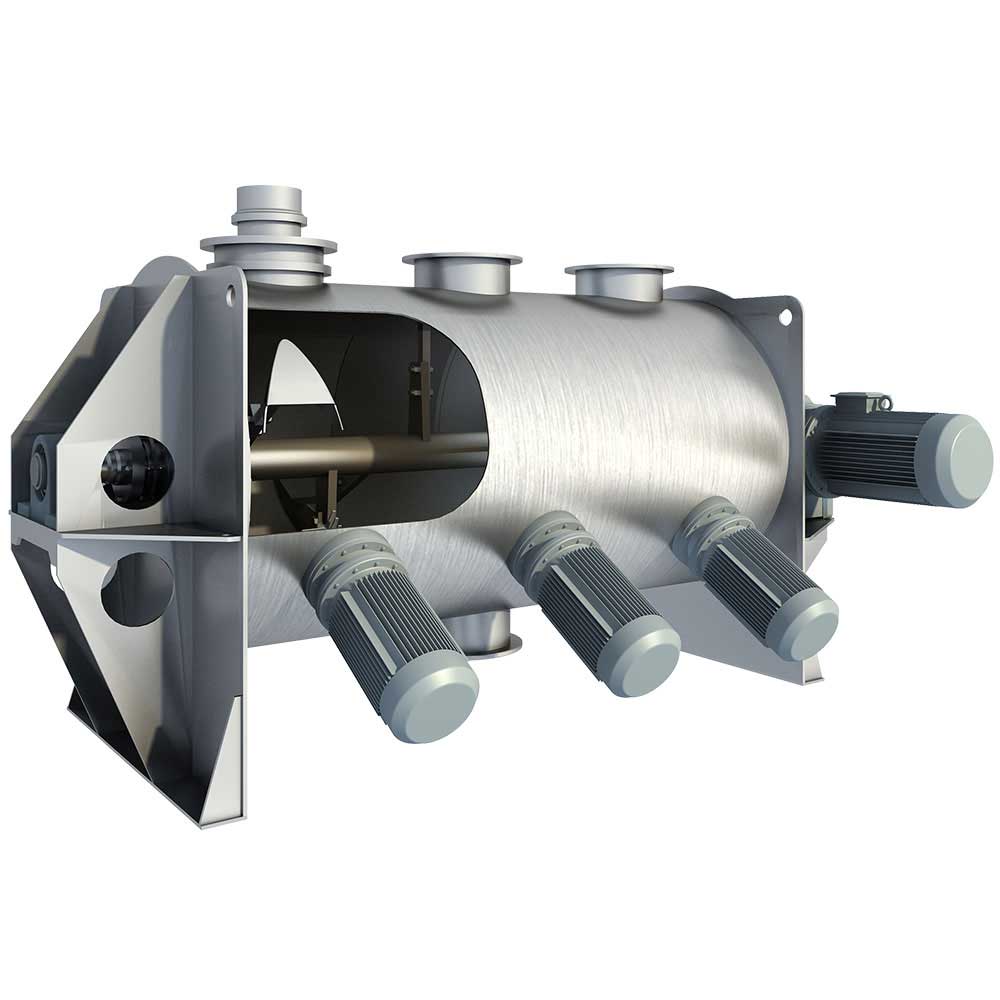
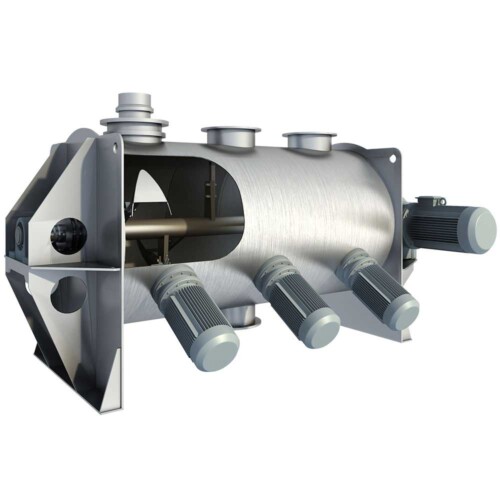
A Ploughshare Mixer is often suitable for materials that tend to agglomerate.
Its plough-shaped mixing tools generate intensive circulation of the material, while optional high-speed choppers can break up lumps and agglomerates during mixing.
The final selection should be based on the material characteristics and process requirements.
Vortex mixers are designed for a wide variety of powders, granules, and powder-liquid mixtures.
Typical applications include chemical powders, food ingredients, pharmaceutical powders, animal feed, dry mortar, ceramics, battery materials, fertilizers, pesticides, minerals, refractory materials, and other bulk solids. The actual mixer configuration should be selected according to the physical and chemical properties of the material.
Vortex manufacture a wide range of industrial powder and bulk solids mixing equipment, including:
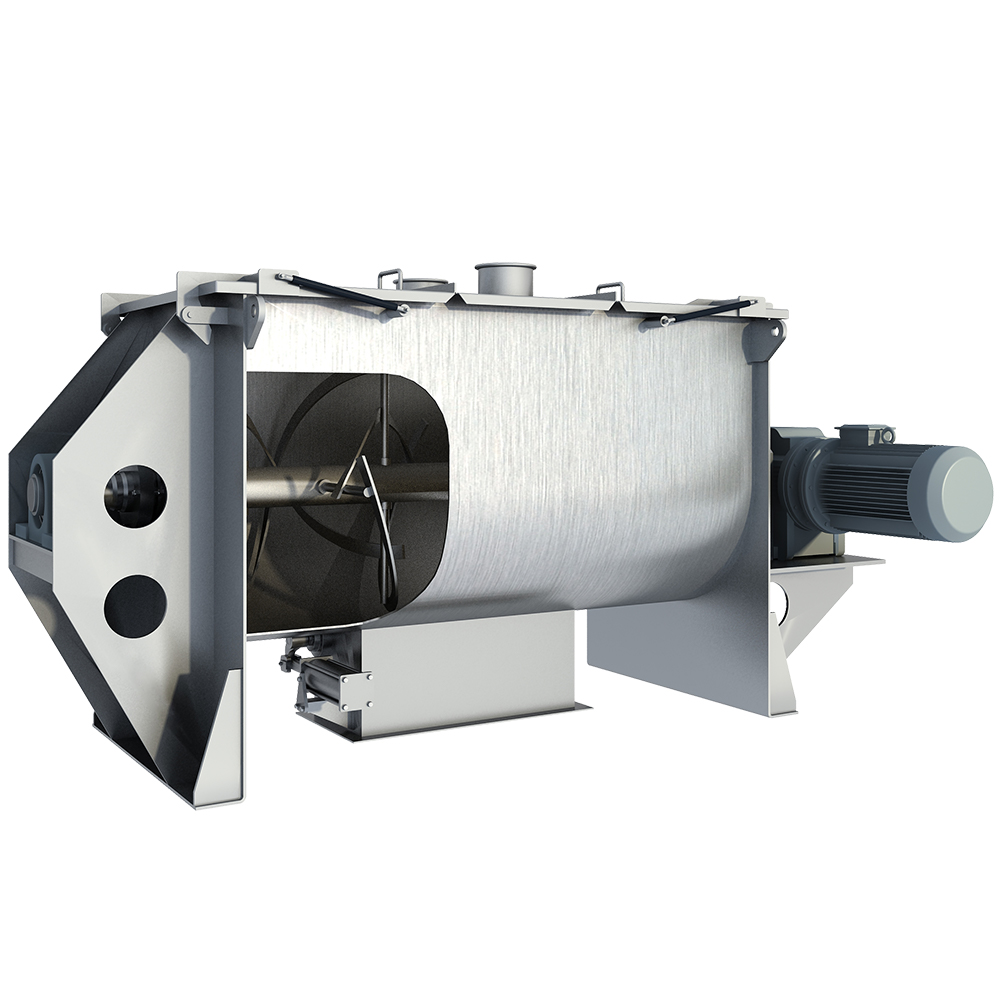
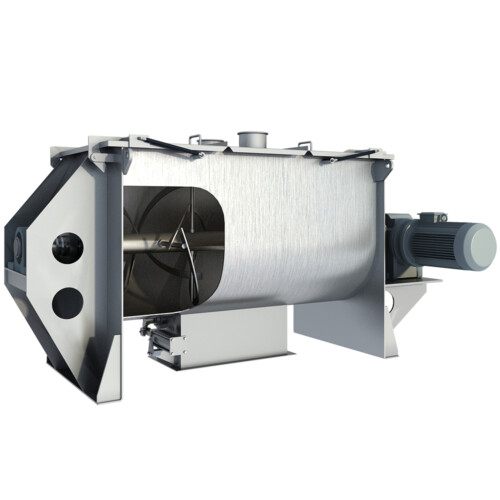
- Horizontal Ribbon Mixers
- Ploughshare Mixers
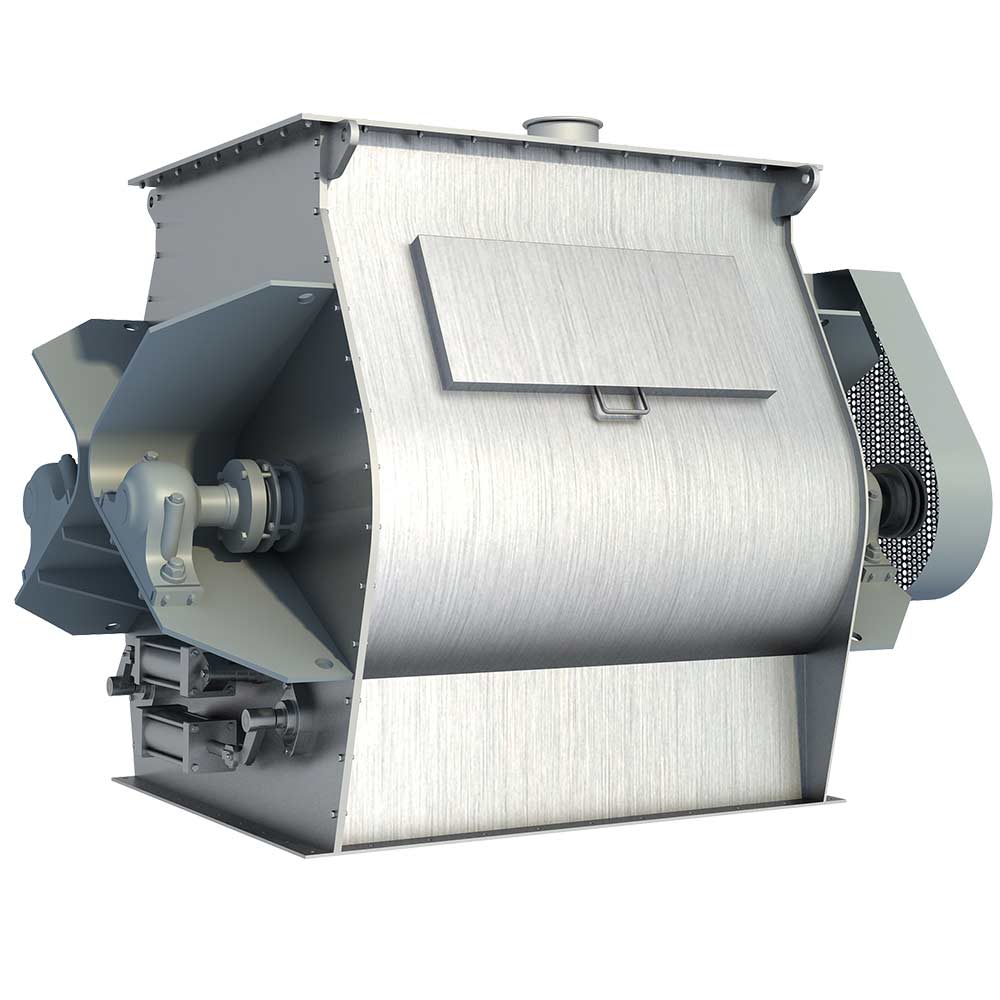
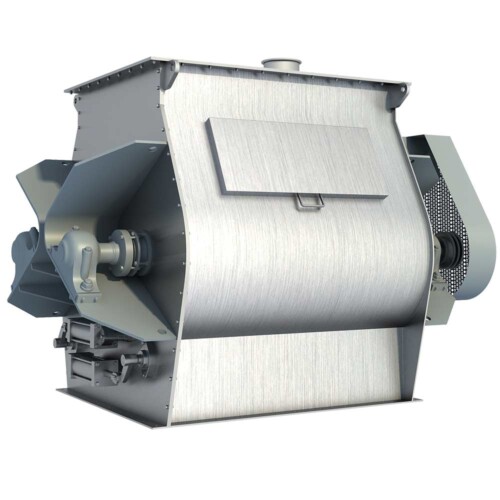
- Double Shaft Paddle Mixers (Paddle Mixers / “No-Gravity” Mixers)
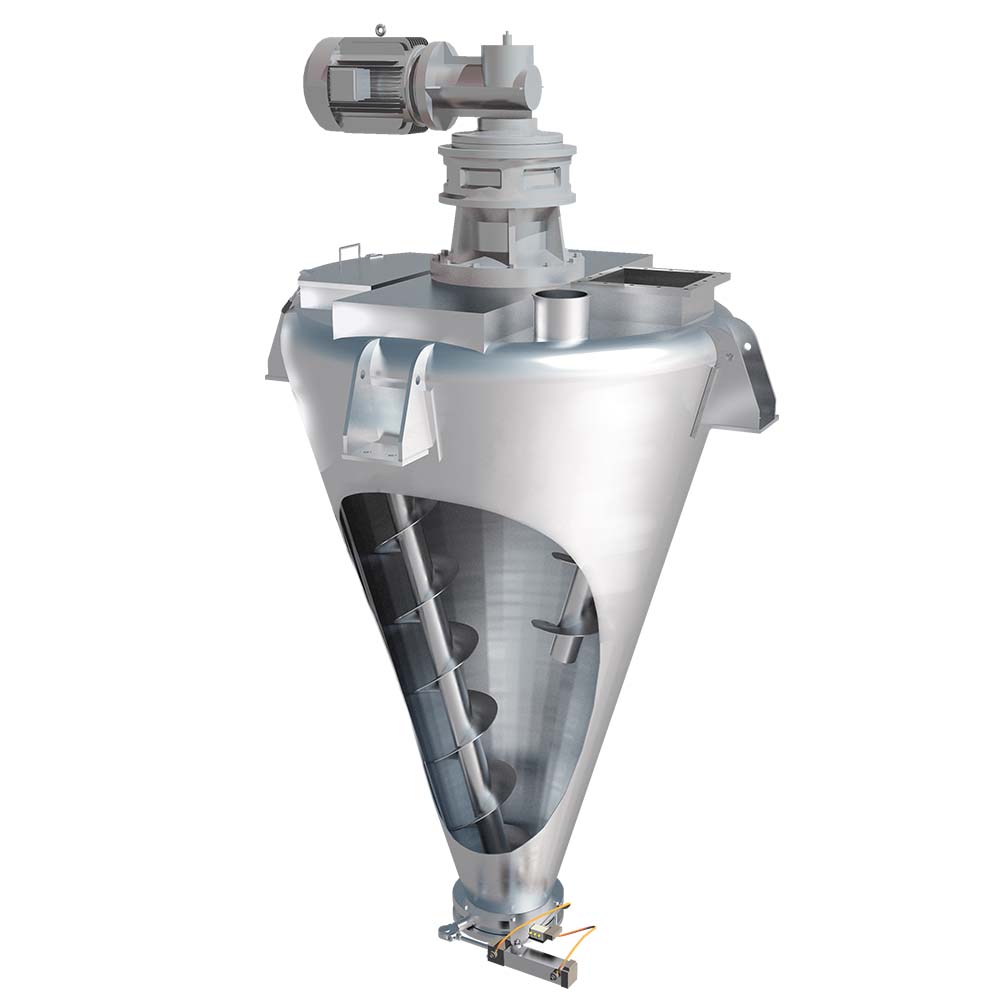
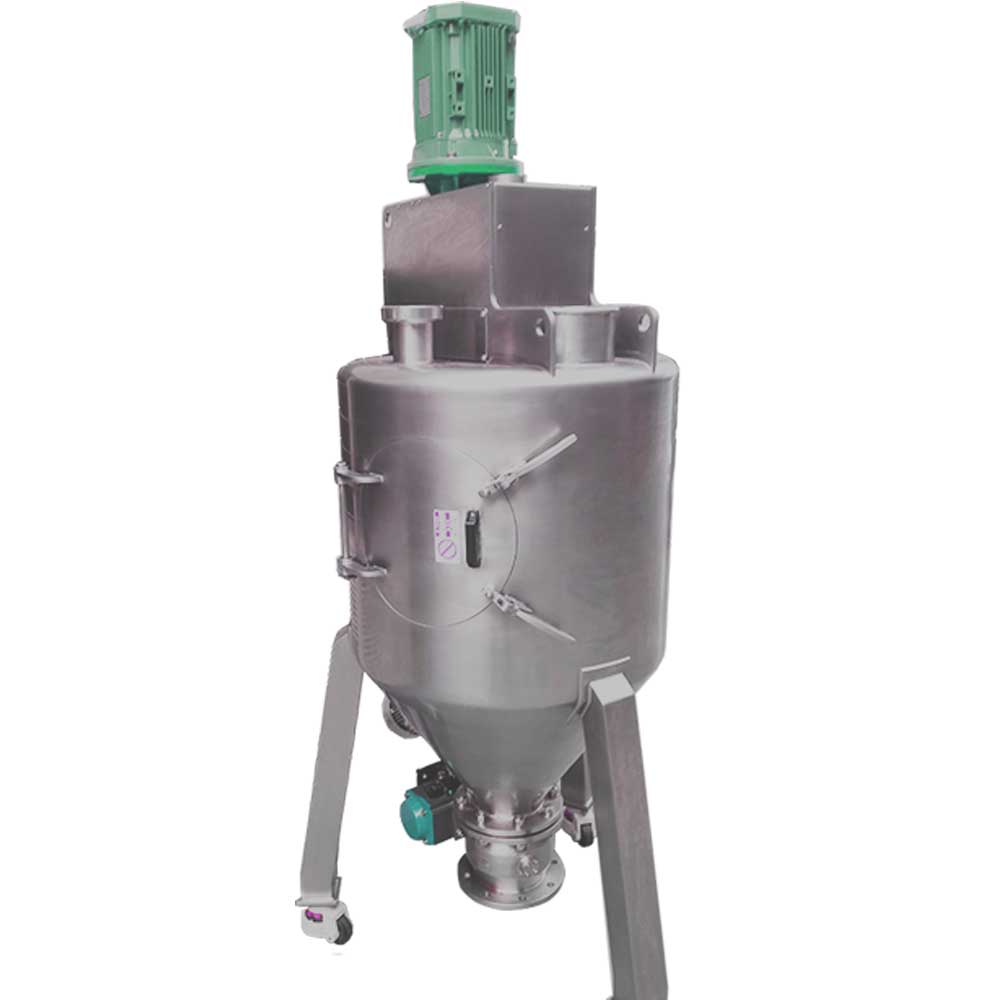
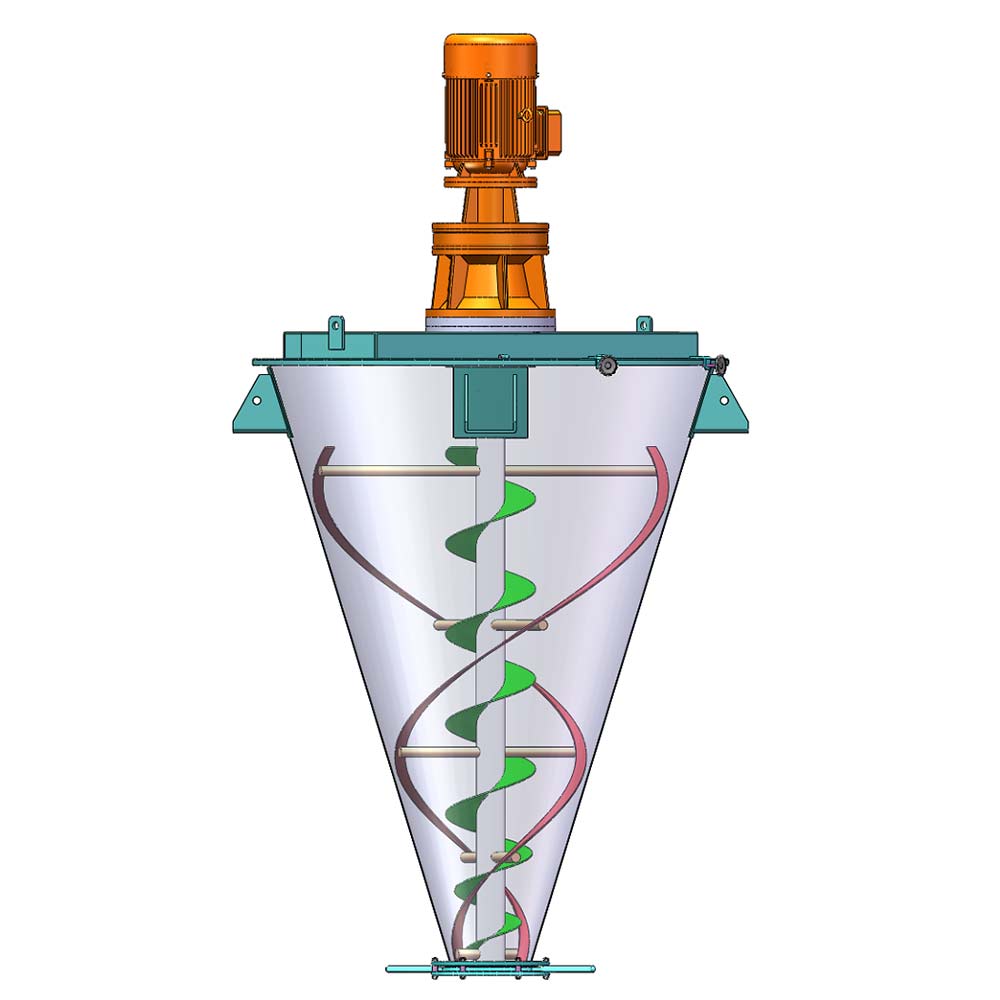
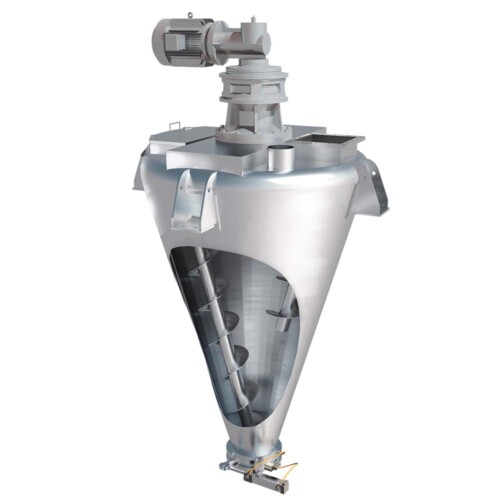
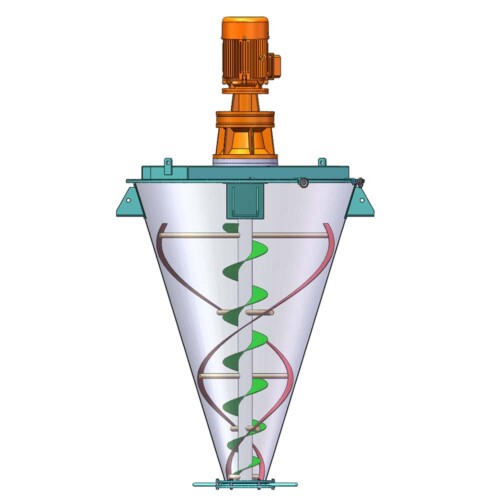
- Conical Twin-Screw Mixers
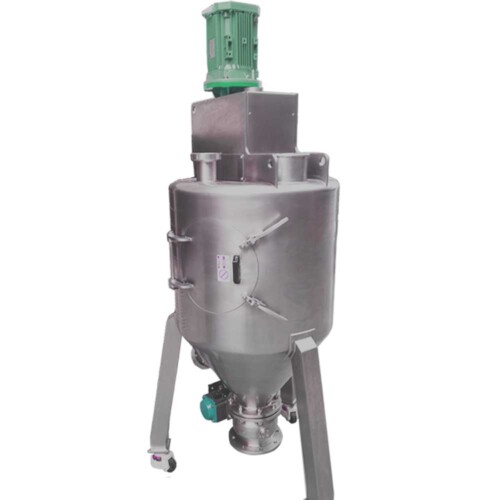
- Vertical Screw Ribbon Mixers
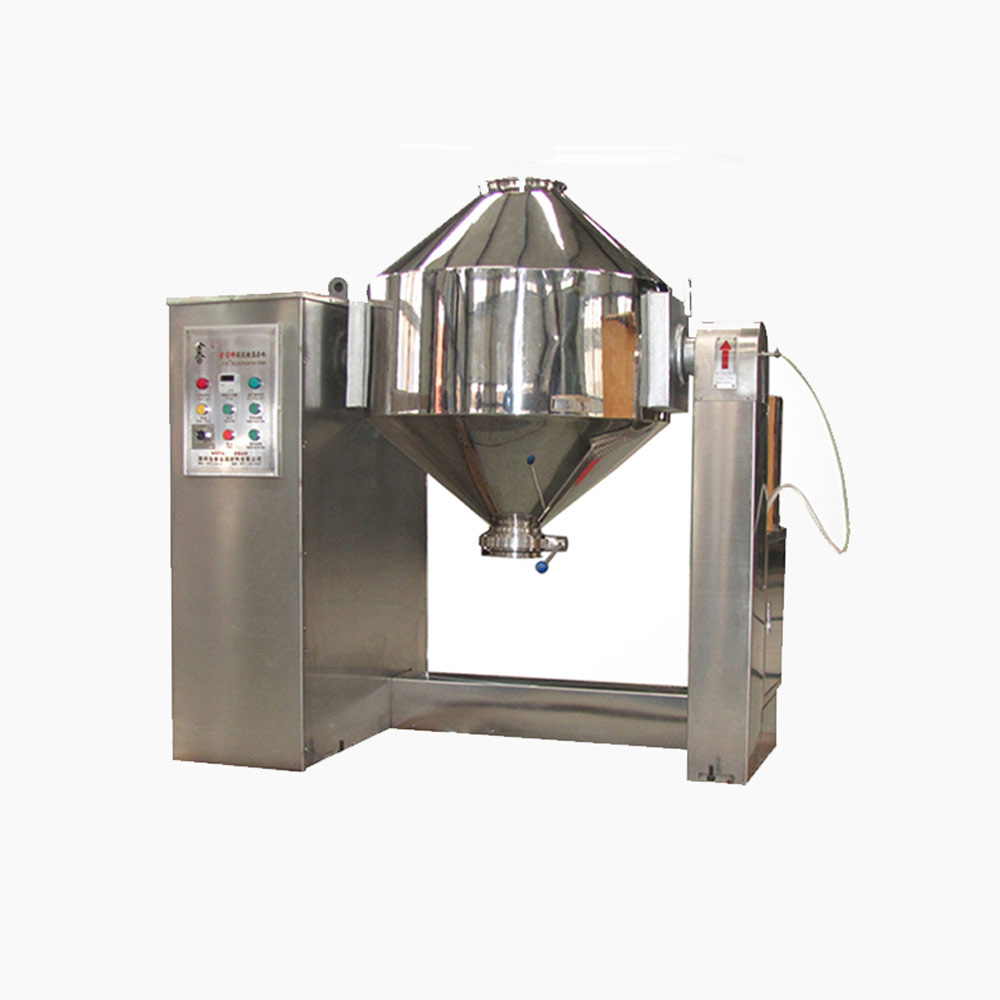
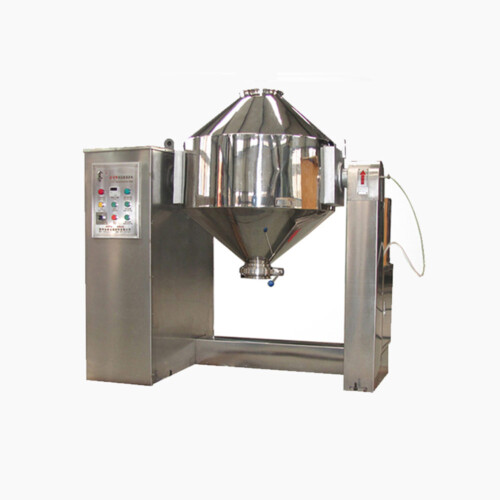
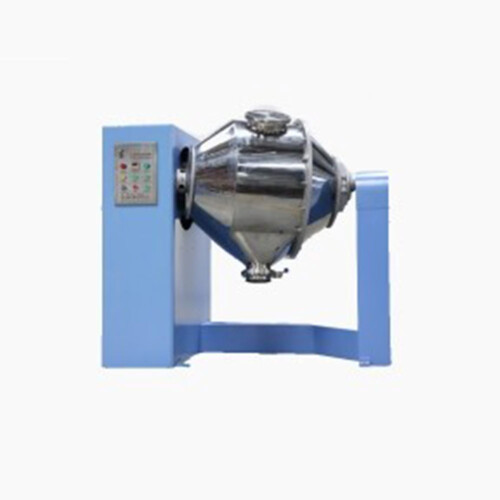
- Double Cone Mixers
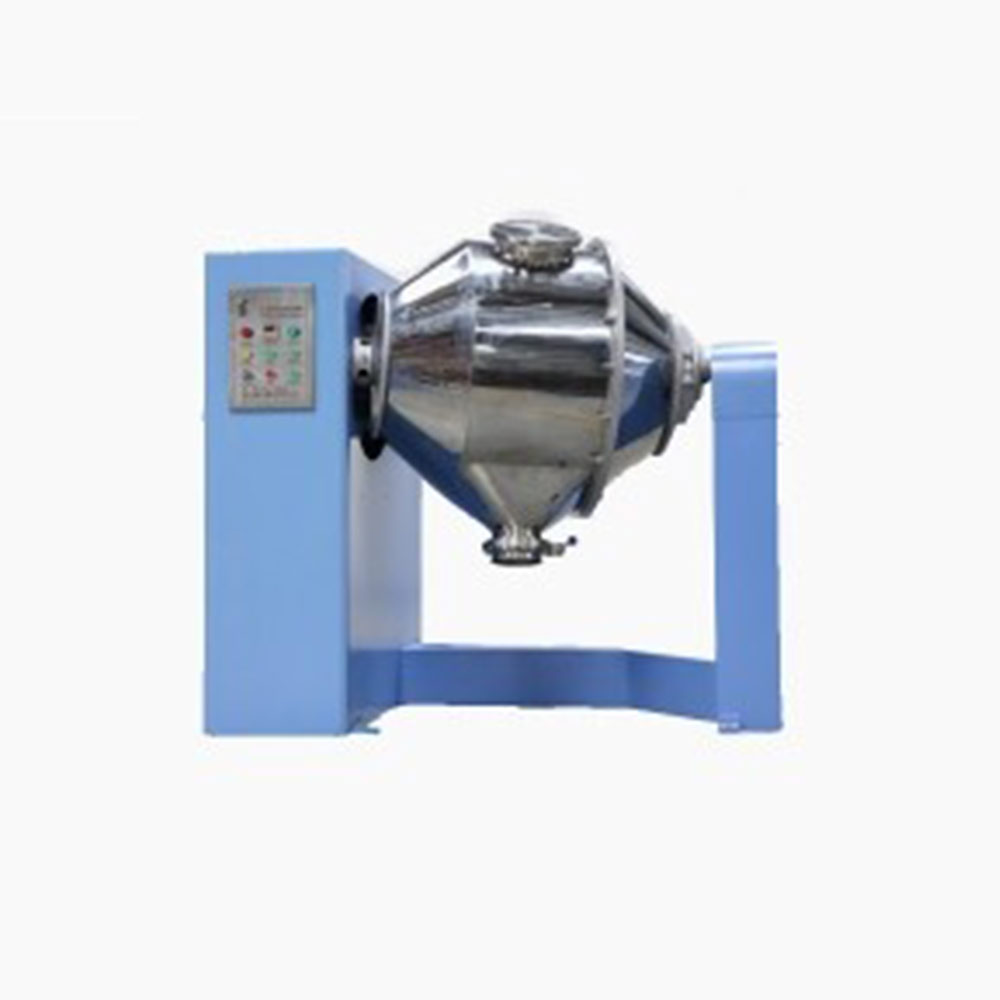
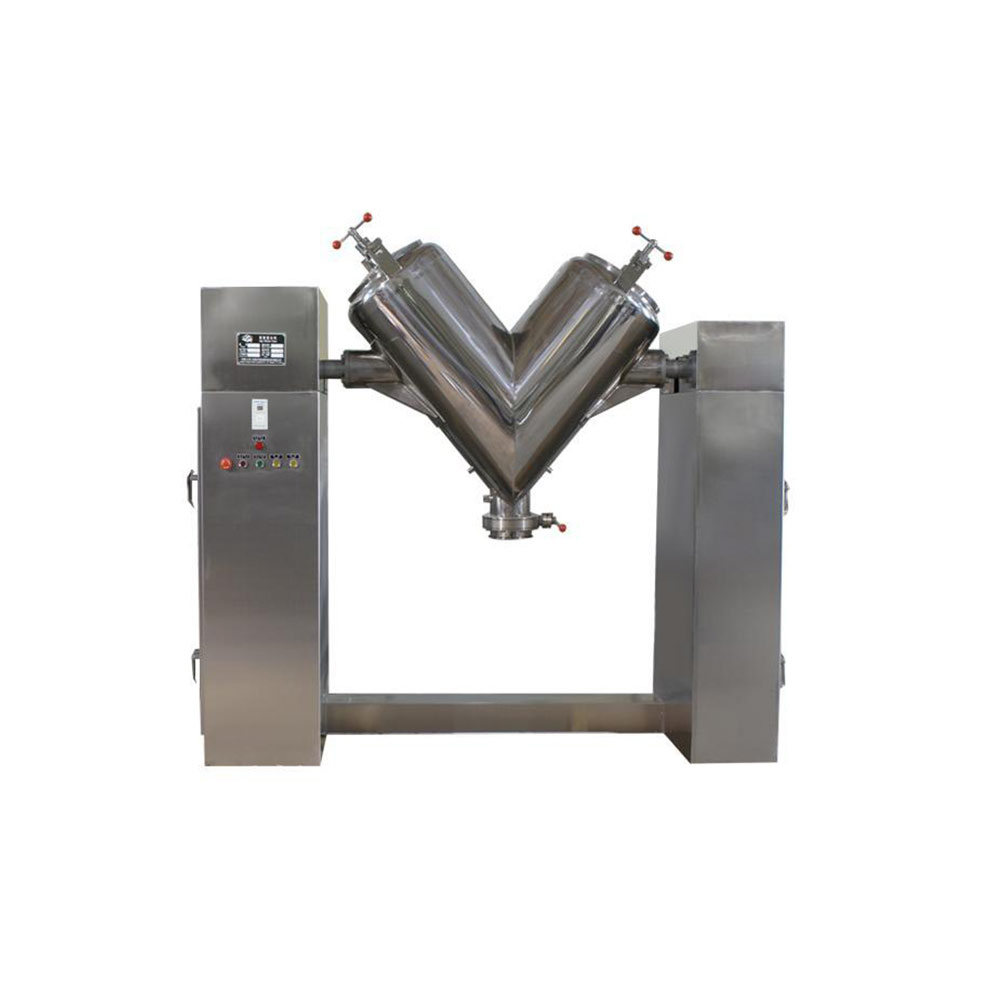
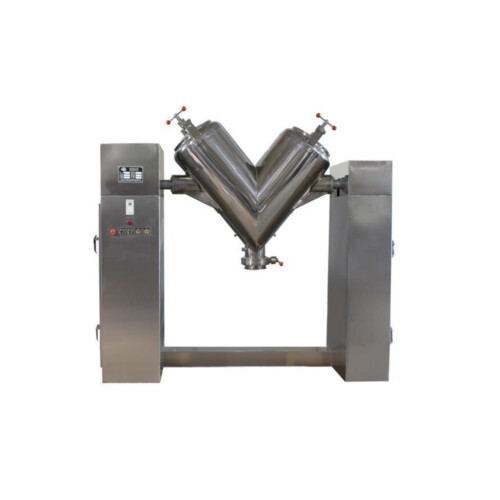
- V-Type Mixers
- 3D Motion Mixers
- Customized mixing systems and complete mixing lines
The most suitable mixer depends on your materials, production capacity, mixing ratio, required mixing time, and process conditions.
Mixer capacity should be evaluated using both the total vessel volume and the effective working volume. The required volume depends on material bulk density, batch weight, filling ratio and the mixing principle of the selected machine. A mixer should not normally be filled to its total geometric volume because sufficient space is required for material movement and effective mixing. For this reason, selecting a mixer based only on vessel volume can result in an unsuitable configuration.
The appropriate industrial powder mixer depends on several factors, including:
- Material characteristics
- Bulk density
- Particle size
- Required mixing uniformity
- Batch size or production capacity
- Moisture content
- Whether heating or drying is required
- Whether liquid addition is required
- Required discharge configuration
- Production and automation requirements
Vortex provides different powder mixer designs so that equipment can be selected according to the specific process requirements.
Vortex powder mixer selection depends on several factors, including:
- Material type and characteristics
- Bulk density and particle size
- Material flowability
- Moisture content
- Viscosity
- Mixing ratio
- Batch size or required production capacity
- Whether liquid addition is required
- Required mixing uniformity
- Temperature, pressure, vacuum, or other process requirements
Vortex engineers can recommend a suitable powder mixer based on your material and process requirements.
Yes, We can supply simple stand alone panels or automated PLC controlled systems. We normally install and test all controls on our mixers before they are shipped.
Yes, we normally test the mixers before they are shipped and mark out the wire need to connect on the control box.
We manufacture specialty mixing equipment for powder & bulk materials. Included are ribbon blender, plough mixer, conical screw mixer, twin shaft paddle mixer, V blender, double cone blender and other auxiliary equipment such as screw conveyor, quantitive auger filler.
We sell across the world, our cusotmers distribute 5 continents.
Share Us With Your Network
How to Measure the Bulk Density?

As a mixer manufacturing company, we understand how important it is for our customers to know the bulk density of their materials. Bulk density plays a crucial role in determining machine’s volume, packaging volume, transport requirements, storage capacity, and even performance in downstream processes. Fortunately, measuring bulk density is a simple process that can be done using just a few tools and a straightforward formula.
What is bulk density?
Bulk density is defined as the mass of a material divided by the total volume it occupies, including both the particles and the spaces between them. The formula looks as following:

Step-by-Step Example: Measuring Bulk Density of a Powder Mixture
Let’s walk through a real example from our customer using a powder mixture used for dental chews:
What you’ll need for measuring :
- A known-volume container (preferably marked with liter measurements)
- A digital scale
- Your well-mixed powder sample

Step 1: Weigh the Empty Container
Weigh your container when it’s completely empty. In our example, the empty plastic bucket weighs: 1.8 kg
Step 2: Fill the Container with Material
Fill the container to a specific volume marking. We used the 15-liter (15L) mark.
Step 3: Weigh the Filled Container
Place the filled container on the same scale. In our case, the weight was: 11.8 kg
Step 4: Subtract the Weight of the Empty Container
Now, subtract the empty container’s weight to find the net weight of the material:
11.8kg−1.8kg=10kg
Step 5: Calculate the Bulk Density
Use the formula:

Final Result:
Bulk Density = 0.6667 kg/L
Why It Matters:
Knowing your product’s bulk density helps:
- Optimize batching and mixing times
- Ensure consistent fill weights in packaging
- Improve transport and storage planning
- Maintain product quality from batch to batch
Pro Tips:
- Always use a container with clear volume markings.
- Make sure your material is well-mixed before testing.
- Tap or level the container lightly to ensure consistent packing without compressing the powder.
- Repeat the process a few times and average the values for better accuracy.
If you need help determining the bulk density of your materials—or want to improve your mixing consistency—don’t hesitate to contact us. Our equipment is engineered to deliver the precision and repeatability your process deserves.
Ask An Expert